Hotel Bedroom Furniture Design: Headboards, Nightstands and Desks That Fit Guest Behaviour
Good hotel bedroom furniture design starts with observing what guests actually do in the room: charge devices, open suitcases, work and sleep. This article shows how those habits can guide the design of headboards, nightstands and desks.
Hotel bedroom furniture design is most successful when each piece answers a real guest habit rather than a mood board image alone. Guests plug in phones at the bed, drop a suitcase on the first flat surface they find, and use the desk for anything from video calls to breakfast. If the furniture ignores these patterns, guests improvise, complaints rise and housekeeping spends more time resetting the room.
This article walks through a behaviour-led approach to three key pieces: the headboard, the nightstands and the desk. It is written for designers, FF&E managers and developers who brief custom hotel furniture projects in Europe and the Middle East, and it complements our wider guide to the typical piece list for a guest room.
Start with a guest behaviour map
Before sketching any piece, list the actions a guest performs in the first hour and the last hour of a stay. Arrival and departure are when furniture is tested hardest. A simple behaviour map takes the design team an hour or two and saves many revisions later.
Typical actions to record:
- Arriving: placing a suitcase, hanging a jacket, finding a socket for a phone.
- Settling in: adjusting lights, setting an alarm, putting down glasses, a book and a watch.
- Working: opening a laptop, joining a call, spreading out papers.
- Sleeping: reaching for a switch, a water glass or a phone in the dark.
- Leaving: packing, checking drawers, finding forgotten chargers.
Business and leisure guests behave differently, and so do guests in different markets. A city hotel in Frankfurt and a resort in the Gulf will not use the room in exactly the same way, so test the map against your own brand and operator feedback instead of assuming.
Headboard design: more than a backrest
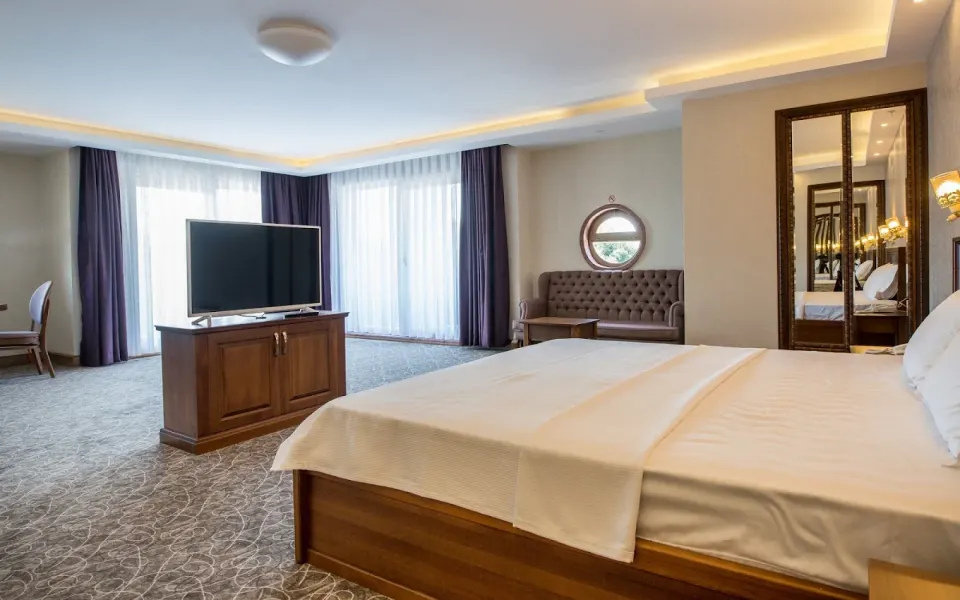
A hotel headboard design has to do four jobs at once: look like the centrepiece of the room, support guests who sit up in bed, protect the wall from wear and, in many projects, carry lighting and power. Treat it as a technical component, not only a decorative one.
Comfort when sitting up
Many guests read or watch television in bed, leaning against the headboard. An upholstered panel with sufficient height and a slight padding thickness is more comfortable than a thin flat board. Check the height with a mock-up, because proportions that look right in a render can feel too low once pillows are in place.
Wall-hung or bed-attached
Wall-hung headboards keep the floor clear for cleaning and make the bed easier to move, but they require reliable wall fixing and tolerances. Bed-attached headboards are simpler to install and do not depend on wall quality, which can matter in renovation or historic building projects. Your choice should follow the construction method of the building and the housekeeping routine.
Fabric, leather and cleanability
Headboards are touched by hair, skin and cosmetics. Specify fabrics that have been tested for abrasion and cleaning, and consider removable panels where the operator wants to replace worn covers without replacing the whole unit. Fire performance requirements vary by country, so confirm them early.
Integrated lighting and cable routes
If reading lights, switches or sockets are integrated into the headboard, plan the cable routes and access points on the shop drawings. Maintenance staff need a way to reach the wiring without damaging the upholstery. Coordination with the electrical contractor at this stage prevents on-site cutting and patching.
Nightstands and bedside tables: the charging and storage hub
Bedside tables in a hotel are used differently from those at home. Guests do not know the room, so they expect obvious surfaces, accessible power and a place to put things down without searching. Design for the half-asleep guest reaching out at night.
Surface area and edges
A top that is too small leads to phones, glasses and watches sliding off. Allow enough usable area, and consider a slight raised lip or a recessed tray for small items. Rounded corners or protected edges reduce chipping from luggage and housekeeping trolleys.
Power and USB placement
Charging is probably the single most common bedside action. Decide whether power sits in the nightstand, the headboard or the wall, and keep it reachable from the pillow without hiding it behind the furniture. If you are integrating sockets into the furniture, see our article on smart hotel furniture for the technical coordination involved.
- Place sockets where a short cable reaches the top surface.
- Avoid positions that the bed or the nightstand itself blocks.
- Check the socket type and voltage against the destination country.
- Provide a cable slot or grommet where cables must pass through the top.
Drawers, shelves or open space
Closed drawers hide Bibles, menus and directories, but guests rarely use them and they add hardware to maintain. An open shelf or a single drawer is often enough. Use commercial-grade runners if drawers are included, because they are opened and closed repeatedly by many users.
Wall-hung versus floor-standing
Wall-hung bedside units make floor cleaning faster and give a lighter look. Floor-standing units are more tolerant of uneven walls and need no structural fixing. Again, the building condition and the maintenance routine should drive the decision.
The guest room desk: a workspace in a small footprint
The guest room desk has changed role. It is no longer only a writing surface but a place for laptops, video calls, make-up, snacks and sometimes room service dining. In smaller rooms it often doubles as a dressing table or console.
Depth, width and legroom
The desk needs enough depth for a laptop and a cup, and enough width for two items side by side. Legroom matters as much as surface size: a modesty panel, a cross rail or a drawer that is too low will make it uncomfortable. Test the chair together with the desk, because a chair with arms may not slide under.
Power, cable management and lighting
Business guests look for sockets at the desk surface, not under it. A discreet cable port keeps chargers tidy and reduces the risk of damaged cables. Task lighting should reduce screen glare, and the location of any mirror or wall-mounted screen should be checked against the desk position.
Surface durability
Desks take laptops, hot cups and cleaning agents. HPL and quality veneers with a suitable protective finish handle this better than many soft painted finishes. Our article on hotel furniture finishes compares the main options in more detail.
Luggage handling: the often forgotten design driver
Luggage is the main reason hotel furniture gets damaged. Guests open suitcases on the bed, on the floor, on the desk or on any surface that looks stable. If you do not provide a place, the guest will choose one for you.
- Provide a luggage rack or luggage bench with a clear position, ideally near the wardrobe.
- Protect wall and furniture edges at suitcase height.
- Keep floor space clear around the entry and wardrobe zones.
- Check that the wardrobe doors can open fully when a suitcase is on the rack.
These small decisions reduce repair costs over the years and keep the room looking new for longer.
Turning behaviour into a specification
Once you know the patterns, convert them into measurable specification points. This is where a design brief becomes something a manufacturer can quote and produce.
| Guest behaviour | Design response | Specification point |
|---|---|---|
| Charging at night | Power reachable from the pillow | Socket position, type and cable route on drawings |
| Sitting up in bed | Padded headboard of suitable height | Height, padding thickness, fabric abrasion and cleaning test |
| Opening a suitcase | Dedicated rack or bench | Position, load capacity, edge protection |
| Working on a laptop | Desk with legroom and power | Depth, width, cable port, surface finish |
| Placing small items | Nightstand with usable top | Top size, lip or tray, rounded edges |
Test the design in a mock-up room
Behaviour-led design should always be checked physically. A mock-up room lets the operator, designer and owner act like guests: sit up against the headboard, reach for the socket, open a suitcase on the rack and work at the desk. Small adjustments to heights, socket positions or edge details are far cheaper at this stage than after mass production. We discuss the approval process in our article on mock-up rooms for hotel projects.
Working with a manufacturer from the start
Involve your hotel FF&E supplier or furniture manufacturer early, ideally while the concept is still flexible. A factory can advise on which details are practical to produce, how to standardise parts across room types and where to use contract-grade materials and hardware. This is especially useful for projects in Europe and the Middle East, where fire, emission and installation requirements can differ by country and by operator.
Conclusion
Hotel bedroom furniture design that follows guest behaviour is easier to use, easier to clean and easier to maintain. Start with a behaviour map, translate it into clear specification points and confirm it in a mock-up. If you are planning a new hotel or a renovation, send us your room schedule or drawings and we will review the guest room package with you and come back with practical suggestions and a project quotation.
Sıkça Sorulan Sorular
What should a hotel headboard design include?
A hotel headboard should offer comfortable back support, protect the wall, use cleanable and tested fabrics or finishes, and allow safe routing of lighting and power if integrated. It also needs a reliable fixing method, either wall-hung or attached to the bed, suited to the building and housekeeping routine.
Where should sockets go on bedside tables in a hotel?
Place sockets where a short cable reaches the pillow and the top surface, without being blocked by the bed or the nightstand. Decide early whether power sits in the furniture, headboard or wall, and check socket type and voltage for the destination country.
What size should a guest room desk be?
There is no single size, as it depends on room area and use. The desk should fit a laptop and a cup comfortably, leave real legroom and allow the chair to slide under. Test it in a mock-up, especially in small rooms where the desk doubles as a dressing table.
Should hotel nightstands be wall-hung or floor-standing?
Wall-hung units speed up floor cleaning and look lighter but need dependable wall fixing. Floor-standing units tolerate uneven walls and need no structural support. The best choice depends on the building condition, the design concept and the maintenance routine of the operator.
How can a mock-up room improve bedroom furniture design?
A mock-up room lets the team test the furniture as guests would use it: sitting against the headboard, reaching sockets, placing luggage and working at the desk. Changes to heights, positions or details are inexpensive at this stage compared with changes after production begins.
Every hotel project is different. Send us your drawings or room schedule for a tailored proposal on materials, lead time and shipping.