Hotel Guest Room Furniture: Typical Piece List and Specification Points
A standard guest room is made of a handful of repeatable pieces, and each one needs its own specification decisions. This guide walks through the typical list and the questions to settle for every item.
Hotel guest room furniture is usually specified as a package, but it is built, priced and approved piece by piece. A clear guest room FF&E list, with the right specification questions answered for each item, is what lets a manufacturer quote accurately and lets your team avoid redesign after production starts. This article breaks a standard room into its components and shows what to decide for each one.
The list below reflects typical European and Middle Eastern projects. Your brand standards, room size and local regulations will change it, so treat it as a starting checklist rather than a fixed template.
The typical guest room FF&E list at a glance
Most rooms combine fixed joinery (built to the walls) and loose furniture (placed freely). The split matters because fixed items depend on site measurements, while loose pieces can usually be produced to standard dimensions.
| Item | Type | Key question to settle |
|---|---|---|
| Headboard | Fixed or semi-fixed | Wall-mounted, bed-mounted or freestanding? |
| Bed base | Loose | Slatted frame, platform or box base? |
| Bedside tables | Loose or wall-hung | Where do power and lighting controls sit? |
| Desk and chair | Loose or fixed | What is the working height and cable route? |
| Luggage rack | Loose or fixed | Folding, fixed or integrated into a unit? |
| Wardrobe | Fixed joinery | Hinged door, sliding door or open rail? |
| TV unit or panel | Fixed | Screen size, bracket and cable concealment |
| Minibar unit | Fixed or loose | Ventilation, appliance dimensions, lock |
| Armchair or sofa | Loose | Fabric, foam and frame construction |
Headboard and bed base
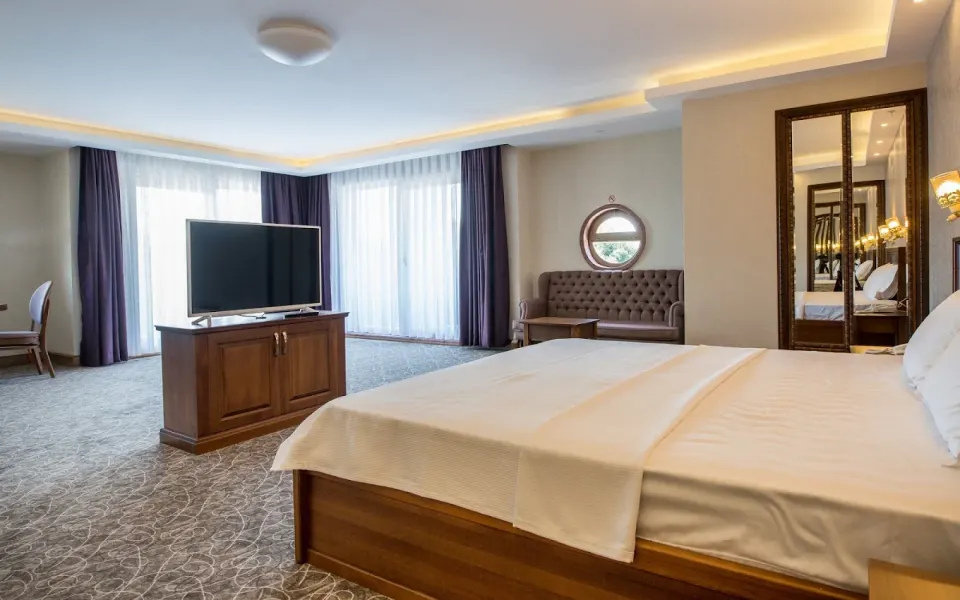
The bed is the visual centre of the room and the piece guests interact with most. Headboards are often the signature design element, so they are also where designers and operators most often request changes.
Headboard specification points
- Fixing method: wall-mounted headboards simplify cleaning under the bed and protect against movement, but need a reliable wall substrate and a mounting plate system.
- Upholstery: confirm fabric type, foam density and whether covers need to be replaceable. Cleanability matters more than the first impression.
- Width and height: match them to the mattress sizes in your brand standard, including any twin configuration that converts from a king.
- Services: decide early whether reading lights, sockets or switches are built into the headboard, as this affects wiring and fire safety requirements.
Bed base specification points
Ask whether the base is a platform, a slatted frame or a box base to hold the mattress. Check the clearance below the bed if housekeeping needs access, and confirm that the frame can be assembled and dismantled without special tools. Corner protection and glides that do not mark the floor are small details that reduce complaints later.
Bedside tables
Bedside tables look simple but carry a lot of function: phone charging, lamps, water glasses, remote controls and often the room control panel. Settle the width and height relative to the mattress top, and decide whether a drawer or open shelf suits your housekeeping routine.
Wall-hung units free the floor for cleaning and give a lighter look, though they require solid fixing points. If you are integrating sockets or USB charging, agree who supplies and wires the electrical components, because this affects certification and installation responsibilities.
Desk, chair and workspace
The desk has changed from a writing table to a working surface for laptops and video calls. A usable desk needs enough depth for a laptop and a cup, knee space, and a power and USB point within reach.
- Decide whether the desk is freestanding, wall-mounted or combined with a console and vanity.
- Check the surface material. HPL or a hard-wearing lacquer resists heat marks and cleaning chemicals better than many natural finishes.
- Specify the chair with the same care as the desk. Seat height, back support, castors or glides and upholstery all affect comfort and wear.
Luggage rack
The luggage rack is a small item that often generates large discussions. A freestanding folding rack is easy to move but can be mistaken for a decoration and damaged. A fixed shelf or a bench-style unit sits permanently in position and tends to last longer.
Consider wall protection behind the rack, since suitcases hit walls constantly. Straps or webbing need to be replaceable, and metal parts should have a finish that resists scratches and corrosion, especially in coastal locations.
Wardrobe and hanging space
Wardrobes vary widely, from open rails in boutique rooms to full-height cabinets with safes, ironing boards and luggage space. This is fixed joinery, so it depends on accurate site dimensions and is covered in more detail in the dedicated article on wardrobes and built-in joinery.
For the room schedule, define the hanging length, the number of shelves, the position of the safe and any internal lighting. Door type is a key choice: hinged doors need swing clearance, while sliding doors save space but need quality runners and good alignment to avoid noise.
TV unit, minibar and small pieces
These smaller items often create the most site problems. A TV panel must be sized to the screen, with provision for the bracket, cable routing and ventilation. A minibar needs space around the appliance for airflow and a clear plan for locks, shelves and a surface for glasses.
Give the manufacturer the exact appliance model and dimensions, not just a nominal size. Changes to appliances after shop drawings are signed can force rework on a whole batch of rooms.
Seating: armchairs, sofas and stools
Upholstered seating combines frame, foam and fabric, and each layer has its own requirements. Ask for the frame material, the foam density and the fabric's abrasion and cleaning performance. In many markets, upholstery must also meet fire-retardant requirements, so check the destination rules before choosing the fabric.
Cross-cutting specification points
Some decisions apply to every item in the room and should be set once, in writing.
- Materials and finishes: agree the board type, edge treatment and surface for every piece so the whole room performs consistently.
- Hardware: specify hinges, drawer runners and fixings to a commercial standard, with sample approval.
- Fire and emission requirements: check the rules for your project country, which differ between Europe and the Gulf, and ask for documentation early.
- Tolerances and installation: define how fixed items meet walls, floors and ceilings, including scribing and gap details.
- Spare parts: decide how many extra units or components to hold for replacements after opening.
How to turn the list into a quotation
Once each piece is defined, assemble the room schedule with quantities per room type, dimensions, materials and finishes. Add reference images and any drawings from the interior designer. A manufacturer can then price the package, flag items that can be standardised and suggest where a change could cut cost without weakening the design.
A mock-up room is the best way to confirm these choices before mass production. It allows the design team and operator to review proportions, hardware and details in real conditions.
Next step
If you are planning a new hotel or a renovation, send us your room schedule, drawings or design brief. We will review the guest room package piece by piece and come back with specification suggestions, an estimated lead time and shipping options for your project.
Sıkça Sorulan Sorular
What furniture is usually included in a hotel guest room?
A typical room includes a headboard and bed base, bedside tables, a desk and chair, a luggage rack, a wardrobe, a TV unit or panel, a minibar unit and some seating. The exact list depends on the brand standard, room size and category of the hotel.
What is the difference between fixed and loose furniture in a hotel room?
Fixed furniture, such as wardrobes and TV panels, is built to the room and depends on site measurements. Loose furniture, such as chairs, bedside tables and the bed base, can be moved. This split affects drawings, production sequence and installation planning.
Should I order a hotel bedroom furniture set as one package?
Usually yes. A single package keeps finishes, dimensions and hardware consistent across all pieces and simplifies approvals and shipping. Some items, such as mattresses or electrical components, may be bought separately, so define the scope clearly in the quotation request.
What information does a manufacturer need to quote guest room furniture?
Send a room schedule with quantities per room type, dimensions, drawings or reference images, preferred materials and finishes, and the destination country. Details on fire requirements, appliances and electrical components help produce a more accurate and complete quotation.
Is a mock-up room necessary for guest room furniture?
It is strongly recommended for projects with many rooms. A mock-up lets the designer, operator and owner confirm proportions, finishes, hardware and details in a real setting. Changes at this stage are far cheaper than changes after production begins.
Every hotel project is different. Send us your drawings or room schedule for a tailored proposal on materials, lead time and shipping.