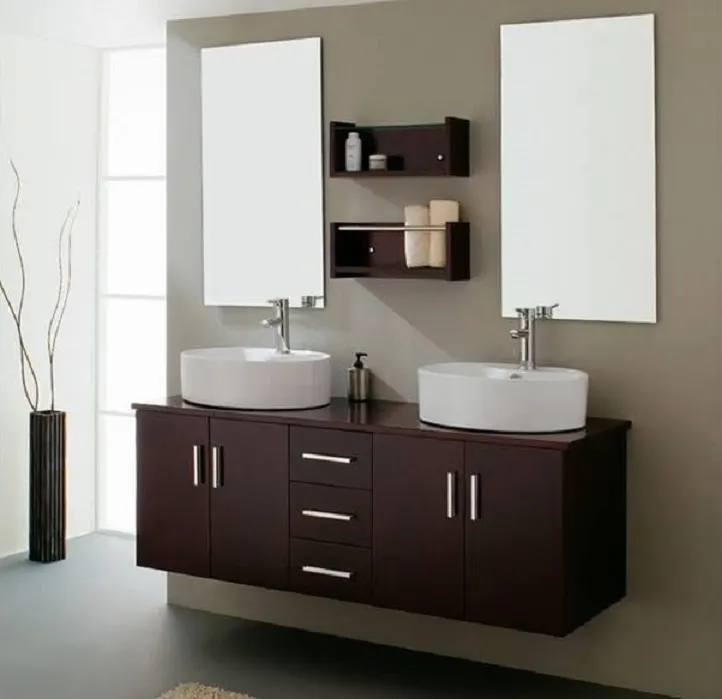
Bathroom Vanity Cabinets for Central Asia and CIS Hotels: Winter Delivery and Specification Notes
Vanity cabinets bound for Central Asia often travel overland in freezing conditions and wait in unheated buildings. This guide explains how to plan transport, storage and specifications so units arrive and install in good condition.
A vanity cabinet for a Central Asia hotel faces a different test from one shipped to a Mediterranean resort. The journey is long, mostly overland, and in winter it can pass through sub-zero temperatures, snow and sudden warm-ups. If you plan packing, storage and specification around that reality, the units arrive in the condition the drawings describe.
This article is for procurement managers, contractors and designers working on projects in Kazakhstan, Uzbekistan, Kyrgyzstan, Turkmenistan, Tajikistan, Azerbaijan, Georgia, Armenia and neighbouring CIS markets. It focuses on one angle: getting bathroom joinery through a cold-season delivery and into a building that may not yet be heated. Timings and costs depend on the project, so we explain factors rather than quote fixed figures.
Why winter changes the plan for vanity cabinets
Vanity cabinets combine several materials: engineered boards, laminate or veneer faces, edge banding, adhesives, stone or solid surface tops, ceramic basins, mirrors and metal hardware. Each reacts differently to cold and to moisture. The risk is rarely the cold alone; it is the combination of low temperature, humidity and rapid change.
- Condensation: a cold crate moved into a warm building draws moisture onto its surfaces, which boards and cartons absorb.
- Freeze-thaw cycles: repeated cycles can stress glued joints, silicone and any water trapped in packaging.
- Brittleness: some plastics, edge bands and adhesives become less forgiving to impact when very cold.
- Handling conditions: ice, snow and poor light on border or site yards raise the chance of drops and crushed corners.
Choosing the route and the shipping term
Many Central Asia deliveries from Istanbul go by road, often via Georgia and Azerbaijan or through Russia, or by a combined sea and rail route. Which one suits you depends on the destination, border situation, season and the cargo volume. We recommend agreeing the route with your freight forwarder before production finishes, not after.
Incoterms matter here because they decide who carries the winter risk at each stage:
| Term | What it means for winter risk |
|---|---|
| EXW / FCA | You or your forwarder collect at the factory and control the whole route, including weather decisions. |
| FOB / CIF | Suited to sea legs; risk transfers at loading, so confirm how the onward overland leg is protected. |
| DAP | The seller arranges delivery to the named place; confirm exactly what is covered at unloading and on a cold site. |
Whichever term you choose, write the delivery address, unloading method and access conditions into the order. Unloading a stone-topped unit from a truck on an icy road is a different job from unloading at a heated dock.
Packing for long cold journeys
Packing should assume that the crate will be handled several times, stored outdoors for some period and opened in a different climate from the one it was packed in. A few measures make a visible difference:
- Moisture barrier: wrap each unit in a sealed polyethylene layer so that condensation forms outside the wrap rather than on the cabinet face.
- Corner and edge protection: rigid corners and dense foam protect edges, which are the most common damage points.
- Separate fragile parts: pack stone tops, basins and mirrors separately from carcasses, with rigid framing and clear orientation marks.
- Crates or strong cartons on pallets: pallets keep cargo off wet or icy floors and allow forklift handling.
- Desiccant and labelling: include desiccant where the route is long, and label by room number and floor for later sequencing.
For large hotels, numbering by room and floor saves days on site. Our separate guide on labelling and sequencing covers this in detail, so here the key point is to make sure labels survive snow and wet handling.
Receiving the delivery: the acclimatisation step
The most overlooked step is what happens after the truck arrives. If a crate that has travelled at sub-zero temperatures is opened immediately in a warm room, moisture can condense on every surface. Instead:
- Move the sealed crates into the building and leave them closed until they approach room temperature.
- Keep the plastic wrap in place during this period.
- Inspect the packaging for damage and take dated photographs before opening, noting any tilt indicators or wet cartons.
- Open crates, check each unit against the packing list, and report any damage promptly to the carrier and supplier.
The time this takes depends on crate size, the temperature difference and the room conditions, so treat it as a site decision rather than a fixed number of hours.
Storing vanities on a site that is not yet heated
Hotel construction schedules often deliver joinery before the building envelope and heating are complete. This is where cabinets suffer most. Wet plaster, screed and tile adhesive release large amounts of moisture, and unheated spaces swing between cold nights and warmer days.
- Store units in a closed, dry room, off the floor on pallets or battens.
- Keep them away from wet trades, open windows and freshly poured screed.
- Leave the protective wrap on, but avoid sealing damp air inside; if the wrap shows internal condensation, open it in a controlled way and let the units dry.
- Stack stone tops upright on suitable supports, not flat under other loads.
- Protect from direct heaters, which can dry surfaces unevenly and cause movement.
If heating is not available, consider asking us to hold the order at the factory for a staged delivery. Coordinating the dispatch date with the building programme often costs less than repairing swollen or marked units.
Specification notes for cold and dry-heated interiors
Once installed, Central Asian hotel bathrooms usually sit in well-heated buildings with dry winter air, while summers can be hot. Joinery therefore sees large seasonal swings. Specification choices that help:
- Boards: choose moisture-resistant carcass material suited to wet areas, with sealed edges and cut-outs. Our guide on moisture-resistant boards compares the main options.
- Edge banding: use well-bonded edging with a good joint finish, since dry heating can open weak joints over time.
- Sealant: use sanitary neutral-cure silicone or an equivalent that stays flexible across temperature change.
- Hardware: corrosion-resistant hinges and runners with soft-close mechanisms suit humid bathrooms; check they are rated for the expected load.
- Veneer and solid timber: these respond to dry air; a stable, well-sealed finish reduces movement, while laminate or HPL fronts are less sensitive.
Electrical items such as mirror lighting must also follow the destination country's rules. Confirm voltage, plug types and any local certification requirements with your consultant before drawings are frozen, since these vary by country and project.
Fire, documentation and customs
Requirements for fire performance and product documentation differ among Kazakhstan, Uzbekistan and other CIS markets, and they may also change with hotel category or project owner. We cannot generalise them here, so ask your local consultant or authority which documents your project needs. Share them with us at the quotation stage, because they can affect board choice, labelling and lead time.
Prepare the commercial paperwork early: packing list by room number, material descriptions, and any certificates the customs broker requests. Missing papers at a border can hold a vehicle for days, which in winter is more than an inconvenience.
Build a buffer into the programme
Winter can delay overland transport through weather, road conditions or border queues. Rather than planning a delivery to arrive on the day the installers start, allow a buffer between arrival and installation. It gives you time for acclimatisation, inspection and replacement of any damaged parts.
A practical approach is to ask for a mock-up vanity first and ship it by the same route you plan for the full order. It shows how the packaging copes with the journey and lets you check finishes and fit before committing the whole package.
What to send us for a quotation
To price a Central Asia or CIS project accurately, we need:
- Bathroom plans and elevations, or your vanity drawings and room schedule.
- Quantities by room type, with left- and right-hand variants if relevant.
- Preferred materials, tops and basin supply arrangements.
- Destination city, delivery term and expected site access and storage conditions.
- Target delivery window and construction programme.
- Any local standards or documents required.
Next step
If you are planning bathrooms for a hotel in Central Asia or the CIS region, send us your drawings and delivery details. We will review materials, suggest packing and staging suited to a winter shipment, and come back with a quotation and an estimated lead time for your project.
Sıkça Sorulan Sorular
Can vanity cabinets be shipped to Central Asia in winter?
Yes, with suitable planning. Sealed moisture-barrier wrapping, rigid corner protection, palletised crates and a buffer in the schedule reduce the risk. Route, border conditions and storage at the destination matter as much as the packing, so agree them with your freight forwarder before dispatch.
Why should crates stay closed after arriving from a cold journey?
A cold crate opened in a warm room attracts condensation on cabinet faces, boards and cartons. Leaving it closed until it approaches room temperature lets moisture form on the outer wrap instead. How long this takes depends on crate size and the temperature difference.
Is it acceptable to store vanities in an unheated hotel building site?
It is better avoided. Unheated, damp spaces with wet plaster or screed expose boards and finishes to moisture and temperature swings. If heating is not ready, store units in a closed dry room off the floor, or ask the supplier to hold dispatch until the building is prepared.
Which Incoterm suits a Central Asia hotel project?
It depends on who should control the overland route and winter risk. EXW or FCA gives you control, FOB and CIF suit sea legs, and DAP puts delivery to a named place with the seller. Whichever you choose, define unloading and site access in writing.
What do you need to quote vanities for Kazakhstan or Uzbekistan?
Send drawings or elevations, quantities by room type, preferred materials, basin and top supply arrangements, destination, delivery term, programme dates and any local documentation requirements. With these details we can propose specifications, packing and an estimated lead time.
Every hotel project is different. Send us your drawings or room schedule for a tailored proposal on materials, lead time and shipping.