The Masterclass in Hydrothermal Architecture: Engineering and Sourcing Criteria for Luxury Bathroom Cabinets
The orchestration of high-end real estate assets, six-star hospitality retreats, and custom residential penthouses demands interior components that go far beyond standard residential carpentry. Within the premium built environment, the procurement, specification, and execution of luxury bathroom cabinets stand as a highly advanced materials science and architectural physics discipline.
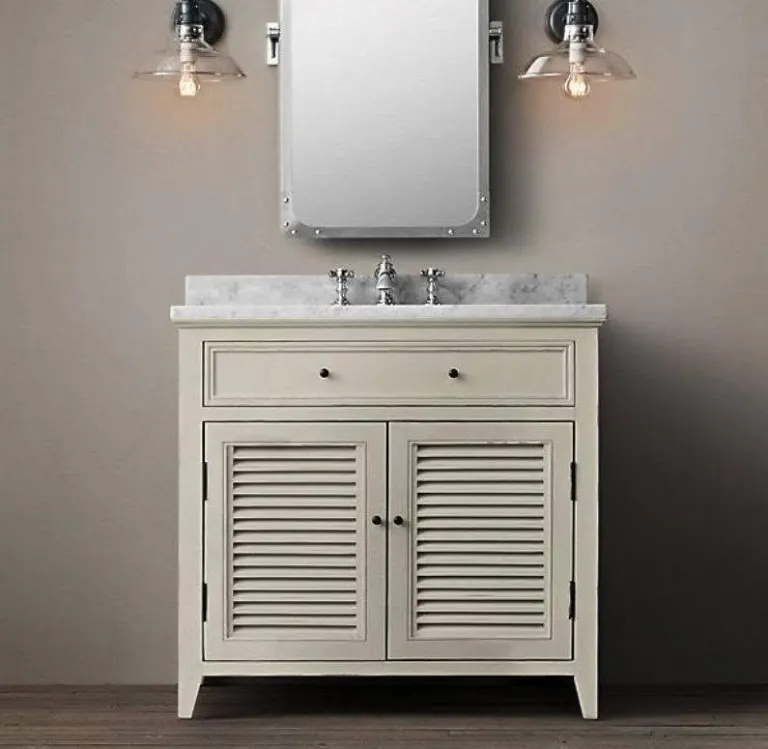
Unlike generic casegoods deployed in climate-controlled living rooms or corporate offices, high-end vanity units and bathroom millwork operate within an incredibly hostile indoor environment. They must endure sudden, dramatic relative humidity (RH) spikes fluctuating between 40% and 100%, intense thermal loading from automated steam showers, direct liquid pooling, and ongoing contact with high-salinity cosmetics and corrosive chemical sanitizers.
When sovereign wealth funds, institutional developers, and award-winning interior architecture firms plan a project's capital expenditure (CAPEX) allocation, the specification framework of luxury bathroom cabinets surfaces as a primary structural and financial milestone. Opting for standard commercial furniture layouts or uncalibrated wood products invariably leads to premature material breakdown: cross-sectional cupping, micro-structural wood fiber checking, structural joint fatigue, door frame racking, and dangerous black mold infestations. To minimize the long-term Total Cost of Ownership (TCO) and maximize property asset preservation, global hospitality specifiers mandate a tightly monitored, data-driven fabrication process.
This comprehensive technical guide serves as an authoritative, information-dense operational reference for the engineering, production, and procurement of contract-grade luxury bathroom cabinets, exploring macro-botanical wood physics, advanced thermodynamic seasoning, waterproof composite core technology, multi-material cross-bonding, high-performance protective coatings, and global green building compliance frameworks.
1. Botanical Physics: Anisotropic Mechanics and Wood Species Selection
To establish a bulletproof contract specification for luxury bathroom cabinets, procurement teams must look past superficial face-grain aesthetics and color trends. Wood is a complex, anisotropic, heterogeneous, and highly hygroscopic organic composite composed of parallel cellulose microfibrils bound within a structural lignin network. Because its physical parameters vary dramatically across its longitudinal, radial, and tangential axes, manufacturing plants must specify timber based on precise cellular density, natural extractive chemistry, and low volumetric shrinkage indices.
▲ Longitudinal Axis (Parallel to grain - Highest tensile strength)
│
│ / Radial Axis (Perpendicular to growth rings)
│ /
│ /
└──────────────► Tangential Axis (Tangent to growth rings - Highest movement risk)
In a high-capacity contract milling yard, structural designers carefully match the botanical properties of specific hard and soft timbers to the high relative humidity conditions that define vanity zones.
Janka Hardness Scales and Structural Fiber Density
The Janka hardness test quantifies a timber species' resistance to mechanical compression, impact indentation, and surface abrasion by measuring the force (expressed in pounds-force, or lbf) required to embed an 11.28 mm diameter steel ball into the wood face to half its diameter. When selecting materials for luxury bathroom cabinets, specifying hard hardwoods with high baseline density is mandatory to resist structural creep and mechanical wear in high-traffic zones:
• Genuine Burmese Teak (Tectona grandis): Possessing an average air-dry density of 650–690 kg/m³ and a Janka rating of 1,070 lbf, Teak stands as an elite material pathway for luxury bathroom cabinets. Its heartwood cells are naturally saturated with hydrophobic oleoresins and tectoquinones—organic rubber compounds that inherently block capillary fluid absorption and provide complete biological immunity to wood-rotting fungi and boring insects.
• European White Oak (Quercus robur): Exhibiting a high dry density of 720–750 kg/m³ and a Janka hardness value of 1,360 lbf, White Oak is a foundational structural material for high-end vanity frames. Its primary anatomical advantage lies in tyloses—balloon-like parenchymal intrusions that expand into and completely plug its water-transporting vascular bundles (xylem), creating a natural barrier against liquid wicking.
• American Black Walnut (Juglans nigra): Offering a Janka value of 1,010 lbf, Black Walnut represents the pinnacle of premium casegood manufacturing. While slightly softer than Oak, its low volumetric shrinkage metrics make it highly stable over time, reducing dimensional shifting across large door stiles and drawer fronts in luxury bathroom cabinets.
The Tangential-to-Radial (T/R) Shrinkage Coefficient
As timber elements inside luxury bathroom cabinets interact with steam cycles, they absorb or release water vapor to align with the changing Equilibrium Moisture Content (EMC). This movement is highly uneven; timber expands and contracts roughly twice as much along its growth rings (tangential axis) as it does across them (radial axis). This difference can cause wide vanity doors to warp, cup, or bind inside the frame.
To prevent these alignment failures, engineers evaluating the manufacturing of luxury bathroom cabinets calculate the Tangential-to-Radial shrinkage ratio:
\(\text{T/R\ Ratio}=\frac{\%\text{\ Tangential\ Shrinkage}}{\%\text{\ Radial\ Shrinkage}}\)
Specifiers targeting high-performance luxury bathroom cabinets require wood species with a T/R ratio closest to 1.0, indicating uniform cross-sectional movement. Teak maintains an excellent metric with a T/R ratio of approximately 1.4. Furthermore, during the raw material conversion phase, industrial sawmills must utilize Rift-Sawn or Quarter-Sawn milling techniques. This process places the growth rings perpendicular to the face of the board, maximizing the dimensional stability of the finished cabinetry panels.
2. Advanced Timber Seasoning: Industrial Kiln-Drying and Moisture Stabilization
The single greatest point of operational failure within the custom fabrication of wet-zone casegoods is the deployment of under-seasoned or uncalibrated raw lumber. If solid timber sections enter the machine shop with an incorrect internal moisture profile, the finished vanity assemblies will distort, crack, or shear their glue lines as soon as the building's climate controls or hot steam showers are turned on. Therefore, the production of luxury bathroom cabinets must be backed by a precise, computer-monitored kiln-drying process.
┌──────────────────────────────────────────────────────────────────────────────┐
│ INDUSTRIAL KILN-DRYING THERMAL STAGES │
├──────────────────────────────────────────────────────────────────────────────┤
│ 1. Preliminary Air Seasoning (Reduces initial fiber moisture saturation) │
├──────────────────────────────────────────────────────────────────────────────┤
│ 2. Pre-Heating Phase (Gradual thermal ramp-up under high relative humidity) │
├──────────────────────────────────────────────────────────────────────────────┤
│ 3. Controlled Desiccation (Computerized drying loops targeting a tight 8%-10% EMC)│
├──────────────────────────────────────────────────────────────────────────────┤
│ 4. Stress Relief Equalization (Moisture re-introduction to relax fiber stress)│
└──────────────────────────────────────────────────────────────────────────────┘
Computerized Dehumidification and Conventional Kilns
To eliminate internal drying stresses, premier factories handling luxury bathroom cabinets run timber batches through automated PLC-controlled kiln chambers.
• The Desiccation Cycle: Arranged with wood stickers separating each layer to allow even air circulation, the wood undergoes a gradual thermal ramp-up. Inline electronic sensors measure real-time core moisture gradients. The computer systematically balances dry-bulb and wet-bulb temperatures to pull bound water out of the cell walls without causing case-hardening (a defect where the outer shell dries fast and traps deep moisture).
• Vacuum-Frequency Drying: For thick solid columns, heavy vanity plinths, or monobloc rails used in structural luxury bathroom cabinets, vacuum-frequency kilns are preferred. By lowering the internal air pressure, the boiling point of water is significantly reduced. This allows subsurface moisture to move smoothly to the wood surface at lower temperatures, drying thick timber rapidly without causing cell collapse or internal honeycomb checking cracks.
Moisture Calibration for Regional Target Microclimates
In the professional production of contract-grade luxury bathroom cabinets, timber is never seasoned to a generic value. Sourcing lines calibrate the target core moisture levels to match the specific geographic environment and HVAC setup of the destination property:
• Arid or heavily air-conditioned microclimates (GCC Region, Desert Climates): Timber is meticulously conditioned down to a tight 6% to 8% moisture content baseline.
• Temperate Industrial Zones (Western Europe, UK, Central Europe): Wood fibers are stabilized at an optimal 8% to 10% moisture content.
• High-Humidity Equatorial Corridors (Tropical Coastal Resorts): The internal moisture baseline is set at 11% to 13% to prevent moisture starvation and sudden wood expansion after delivery.
3. High-Performance Substrate Hybridization and Engineered Core Technology
While genuine solid timber face frames, door stiles, and visible panel work define the exterior luxury of premium millwork, engineering wide expanses—such as large vanity side gables, carcass backs, and drawer bases—entirely from raw solid planks is not practical for large-scale contract developments. Wide solid wood panels move continuously across their width; a 600 mm wide raw solid slab can expand up to 8 mm during prolonged steam exposure. To deliver flawless alignment across vast projects, the modern manufacturing of luxury bathroom cabinets relies on a hybrid layout, matching solid wood framing with high-performance engineered wood composites.
┌──────────────────────────────────────────────────────────────────────────────┐
│ CONTRACT VANITY MATERIAL SPECIFICATIONS │
├───────────────────┬───────────────────────┬───────────────────┬──────────────┤
│ Substrate Type │ Core Density Baseline │ Elastic Modulus │ Moisture Swell│
├───────────────────┼───────────────────────┼───────────────────┼──────────────┤
│ Premium MDF │ ≥ 760 kg/m³ │ 3,200 N/mm² │ ≤ 8% (EN 317)│
│ High-Density HDF │ ≥ 860 kg/m³ │ 3,800 N/mm² │ ≤ 6% (EN 317)│
│ Plywood (Birch) │ 680 - 720 kg/m³ │ 4,500 N/mm² │ Near Zero │
└───────────────────┴───────────────────────┴───────────────────┴──────────────┘
Marine-Grade Multi-Ply Birch Plywood (BS 1088 Standard)
For internal vanity drawer bodies, plumbing cutout partitions, and sub-counter support rails within luxury bathroom cabinets, marine-grade birch plywood conforming to the BS 1088 standard is specified.
• Cross-Lamination Mechanics: Built from an odd number of precision-peeled hardwood veneers laid at right angles to adjacent layers, multi-ply plywood distributes tensile strength evenly in both directions.
• Adhesive Sintering: Individual plies are laminated under extreme pressure using advanced phenolic or resorcinol-formaldehyde adhesives. These structural glues are completely waterproof (WBP – Water and Boil Proof) and will not break down, swell, or separate even when exposed to boiling water or continuous steam.
Moisture-Resistant Engineered Composites (MR-MDF / HDF)
For flat cabinet door centers, side partitions, and internal storage shelves used in luxury bathroom cabinets, premium moisture-resistant Medium-Density Fiberboard (MR-MDF) or High-Density Fiberboard (HDF) with a baseline core density exceeding 800 kg/m³ is selected.
• Polymer Matrix Resins: Unlike standard interior MDF, which uses water-soluble urea-formaldehyde binders, MR-MDF is manufactured using moisture-repelling melamine-urea-formaldehyde (MUF) or polymeric diphenylmethane diisocyanate (pMDI) resin matrices. This chemical setup prevents edge-swelling and thickness distortion when the panel edges encounter humid air.
• Air Quality Emissions Compliance: To protect guest wellness in enclosed commercial properties, all composite cores utilized in luxury bathroom cabinets must meet strict international clean air standards. Substrates must carry CARB Phase 2 or EPA TSCA Title VI certifications, limiting formaldehyde emissions to under 0.05 ppm. This guarantees that cabinetry deployed in enclosed layouts does not release harmful volatile organic compounds (VOCs) into the indoor air, helping developers secure higher scores in green building metrics (LEED or BREEAM).
4. Contract Joinery Engineering: CNC Wood Processing and High-Shear Joints
The structural life of heavy-use commercial cabinetry is defined by its weak points: its joints. Sourcing premium timber species for luxury bathroom cabinets will not matter if the components are joined using weak residential hardware cams or simple pocket-hole screws. Vanity assemblies subjected to high static stone-countertop loads and constant door-slamming dynamics require specialized industrial joinery to prevent frame racking or mechanical failure over time.
[Mortise and Tenon Joint] [Multi-Dowel Integration]
┌───────────────┐ ┌───┐ ┌───┐
│ │ │ │ │ │
┌─────┘ ┌───────┐ └─────┐ ┌─────┴───┴───┴───┴─────┐
│ │ Tenon │ │ │ │
│ ┌─────┘ (Tongue)└─────┐ │ │ [ Fluted Dowels ] │
│ │ Mortise │ │ │ High-Density Beech │
└───┴─────(Pocket)────────┴───┘ └───────────────────────┘
Multi-Axis CNC Mechanical Tolerances
High-volume manufacturing lines specializing in luxury bathroom cabinets operate with digital workflows connecting CAD/CAM design programs directly to automated multi-axis CNC machinery networks. These robotic setups bore system holes, rout pocket grooves, and shape mortise profiles with tight mechanical tolerances of less than \(\pm 0.02\text{ mm}\). This precision guarantees that cabinet boxes are perfectly square, preventing face frame misalignments and speeding up on-site installation.
Structural Joinery Configurations
• Industrial Mortise and Tenon Joinery: This remains the structural gold standard for joining solid wood face frames and shaker-style door stiles during the assembly of luxury bathroom cabinets. The tenon tongue must measure exactly two-thirds the thickness of the receiving rail, ensuring an interlocking fit that handles high lateral loads without breaking.
• Multi-Dowel Box Assembly: For carcase box assembly, automated dowel insertion lines drive fluted hardwood dowels—crafted from ultra-dense European Beech (Fagus sylvatica)—into precision-bored holes. The compressed grooves along the dowel walls allow trapped air and adhesives to vent out during pressing, creating a tight vacuum-sealed bond line.
• Corner-Block Base Reinforcements: The lower corners of sink bases and heavy drawer modules are reinforced with grain-aligned solid wood corner blocks. These blocks are glued and secured using twin-fast steel screws or heavy-duty corner hanger bolts, completely eliminating frame racking forces under heavy mermer (marble) countertop weight.
Transitioning to Reactive Polyurethane (PUR) Adhesives
Traditional water-based polyvinyl acetate (PVA) wood glues degrade and crystallize over time when exposed to the deep temperature and humidity shifts of commercial properties. The advanced industrial production of luxury bathroom cabinets utilizes cross-linking Reactive Polyurethane (PUR) hot-melt adhesives. PUR glues cure through a chemical reaction with the wood's inner cellular moisture, creating an unbreakable polymer mesh that moves with the timber without separating.
5. Advanced Edge-Sealing Technologies: Laser, Hot-Air, and Zero-Joint Fusion
The exposed edge lines of veneered and laminated panels represent their primary weak point when subjected to moisture penetration and mechanical shock. If water vapor leaks past a cabinet edge, the underlying composite core will swell, causing the decorative face veneer to lift and peel away. Because of this vulnerability, modern engineering of luxury bathroom cabinets places immense focus on advanced edge-sealing technologies.
┌──────────────────────────────────────────────────────────────────────────────┐
│ EDGEBANDING ADHESIVE PERFORMANCE MATRIX │
├──────────────────────────────┬──────────────────────────────┬────────────────┤
│ Glue / Fusion Technology │ Moisture Vapor Barrier Index │ Heat Resistance│
├──────────────────────────────┼──────────────────────────────┼────────────────┤
│ Standard EVA Hot-Melt │ Poor (Prone to delamination) │ Low (60°C) │
│ Reactive Polyurethane (PUR) │ Exceptional (Waterproof) │ High (150°C) │
│ Laser / Hot-Air Zero-Joint │ Maximum (Seamless Sintering) │ Maximum │
└──────────────────────────────┴──────────────────────────────┴────────────────┘
PUR Edgebanding Lines
Standard ethylene-vinyl acetate (EVA) hot-melt glues are highly vulnerable to the wet conditions near bathroom vanity stations. EVA glues melt at around 60°C and can crack under constant moisture, which can cause edge bands to slip and peel. To prevent this, high-end operators handling luxury bathroom cabinets use specialized PUR edgebanding lines. PUR adhesive forms a micro-thin, waterproof bond line that can handle temperatures up to 150°C, sealing the panel core completely against steam entry.
Laser and Hot-Air Zero-Joint Fusion Sintering
The absolute peak of edge protection in the fabrication of luxury bathroom cabinets is achieved through laser or hot-air zero-joint fusion sintering systems.
• The Technology: This workflow utilizes specialized edgeband trims that feature a pre-applied, co-extruded functional polymer layer on their reverse face.
• The Fusion Mechanism: A high-intensity laser beam or compressed hot-air jet melts this functional polymer backing within milliseconds right at the compression point, welding the band directly onto the wood fiber core at a molecular level.
• The Performance Result: This creates a seamless, permanent joint with a completely invisible glue line. It offers unmatched moisture-vapor barrier protection and absolute mechanical bond security, raising the finish standard of luxury bathroom cabinets significantly.
6. Industrial Surface Chemistry: High-Performance Protective Coatings
Raw timber and decorative wood veneers degrade rapidly if their protective surface finish cannot withstand the daily wear of a busy bathroom environment. The durability of commercial luxury bathroom cabinets depends on high-performance industrial coatings designed to meet strict chemical resistance (EN 12720) and scratch resistance (EN 438) standards.
┌──────────────────────────────────────────────────────────────────────────────┐
│ COATING RESIN CHEMICAL MATRIX SPECTRUM │
├──────────────────────────────┬──────────────────────────────┬────────────────┤
│ Finish Formulation │ Vapor Barrier Protection │ Surface Hardness│
├──────────────────────────────┼──────────────────────────────┼────────────────┤
│ Conventional Nitrocellulose │ Deficient (Prone to staining)│ Deficient │
│ Two-Component (2K) Polyurethane│ Superior Performance │ Very High │
│ Automated Flat-Line UV Acrylic│ Maximum Vapor Barrier Shield │ Elongated/Hard │
└──────────────────────────────┴──────────────────────────────┴────────────────┘
Two-Component (2K) Aliphatic Polyurethane Coating Systems
For high-exposure custom woodwork, vanity edges, and cabinet frames, a 2K aliphatic polyurethane coating system is the industry standard in the development of luxury bathroom cabinets.
• Cross-Linked Stability: This finish relies on a chemical cross-linking reaction between an acrylic polyol resin base (Component A) and an aliphatic isocyanate hardener (Component B), forming an airtight, dense molecular shield.
• Vapor Barrier Protection: The cured coating forms a tough yet flexible film over the wood. It blocks liquid and steam penetration while flexing with the wood's natural seasonal movements, preventing micro-cracking, flaking, and clouding.
• UV Yellowing Defense: The aliphatic compound ensures the finish remains clear under UV radiation, preventing natural light timbers like Maple, Ash, or Oak from turning yellow or orange over time.
Automated Flat-Line UV Polymeric Curing Tunnels
To optimize throughput for large-scale developments, top-tier factories handling luxury bathroom cabinets deploy automated flat-line UV finishing lines. Wooden panels move along conveyor setups where photo-reactive acrylated polymers are rolled on and cured almost instantly under high-intensity UV lamp arrays. This process produces an ultra-scratch-resistant finish with zero VOC emissions, allowing completed casegoods to be safely packed for shipping straight off the production line.
Water-Based Eco-Label Polyurethane Systems
As international environmental regulations tighten, the industrial fabrication of luxury bathroom cabinets increasingly relies on water-borne polyurethane dispersions (PUDs). These advanced systems use water as the primary carrying medium rather than organic solvents, drastically lowering volatile organic compound emissions to less than 50 grams per liter. When cross-linked with hydrophilic polyisocyanates, these water-based coatings achieve the same surface hardness, chemical resistance, and thermal stability as traditional solvent-borne finishes, matching all international EN 12720 performance rules for contact with bathroom cosmetics, toothpastes, and alcohols.
7. Kinematic Engineering and Anti-Corrosive Metallurgic Hardware
The daily user experience and long-term durability of bathroom casework are directly linked to the engineering quality of its moving parts. Heavy pull-out cosmetic drawers, soft-close door hinges, and integrated mirrors undergo thousands of mechanical cycles over their operational lifespan. In the professional production of luxury bathroom cabinets, specifying high-end hardware options ensures smooth movement and prevents structural sagging over time.
┌──────────────────────────────────────────────────────────────────────────────┐
│ HARDWARE KINEMATIC PERFORMANCE STANDARDS │
├───────────────────┬──────────────────────────────────┬───────────────────────┤
│ Hardware Unit │ Minimum Lifecycle Certification │ Dynamic Load Rating │
├───────────────────┼──────────────────────────────────┼───────────────────────┤
│ Concealed Hinges │ 80,000 Cycles (DIN EN 15570) │ Self-Closing/Soft-Close│
│ Drawer Runners │ 100,000 Cycles (DIN EN 15338) │ 40 kg to 70 kg Dynamic│
│ Lift Systems │ 40,000 Cycles (Dynamic Lever) │ Weight-Proportional │
└───────────────────┴──────────────────────────────────┴───────────────────────┘
Synchronized Concealed Full-Extension Drawer Slides
Modern drawer configurations require full-extension, synchronized concealed runners equipped with automated soft-closing hydraulic dampers. These slides utilize technical polymer roller bearings driven inside high-tensile steel tracking channels, providing quiet, smooth movement even under full loads. Specifying a high dynamic load capacity of 40 kg to 70 kg for deep storage drawers completely eliminates runner sagging when the drawer is fully extended, keeping vanity faces aligned over years of active use, which is a major factor in high-end luxury bathroom cabinets.
Mandating AISI 316 Marine-Grade Stainless Steel Hardware
Sink base cabinets and vanity modules exposed to direct moisture, standing water, and chemical cleaning vapors require extreme hardware korozyon (corrosion) resistance. Standard nickel-plated steel hinges degrade rapidly when exposed to humid bathroom air, turning into rusty, stiff joints that strain the wood carcass screws. To prevent this, quality standards for luxury bathroom cabinets mandate the use of AISI 316 marine-grade stainless steel or premium coated alloy hardware. This choice protects mechanical joints from rusting, ensures smooth operation, and maintains cabinet frame structural alignment for years.
8. Multi-Material Cross-Bonding: Interlocking Wood with Metals and Natural Stone
Modern premium interior architecture frequently blends wood panels with contrasting textures like brushed metals, back-painted glass, and thick natural stone vanity countertops. The engineering pipeline behind luxury bathroom cabinets requires managing the distinct expansion and contraction profiles of these materials to avoid joint failures.
[ CONVENTIONAL RIGID FASTENING ] [ INDUSTRIAL SLOTTED TRACK ASSEMBLY ]
(Cracks panel under humidity) (Allows free atmospheric expansion)
┌───────────────┐ ┌───────────────┐
│ Metal Trim │ │ Metal Trim │
├───────────────┤ ├───────────────┤
│ Rigid Screw │ │ Washer Screw │
│ (No Movement) │ │ (Slides Free) │
└───────────────┘ └───────────────┘
◄─────────────►
Oval Slotted Channel
Managing Movement with Slotted Fastening
Solid wood face frames and doors expand and contract based on humidity shifts, while metal accents or perimeter trim respond strictly to temperature changes. If a brass inlay or stainless steel structural frame is rigidly anchored to a wood panel, the wood's natural movement will eventually buckle the metal or crack the timber face. To eliminate this stress, all mounting channels feature oval, slotted tracks. Structural connection screws are driven directly into the center of these slots, allowing the wood to adjust smoothly under the metal without creating internal structural tension.
Countertop Weight Distribution
When heavy mermer (marble), kuvarsit (quartzite), or granit (granite) slabs are placed over lower cabinet boxes to form sink decks, the static load can cause the wood frame to sag over time. Internal support skeletons must feature concealed vertical hardwood posts that transfer the heavy vertical weight straight down to the adjustable floor glides. High-elasticity polyurethane spacers are placed between the stone and wood surfaces to absorb sudden shocks and allow both materials to adjust independently, a crucial structural consideration in the execution of luxury bathroom cabinets.
9. Sourcing Logistics, Export Packaging, and Total Cost of Ownership (TCO) Analysis
When managing a high-volume hospitality or commercial budget, savvy procurement teams look past upfront purchase costs (CAPEX) to evaluate the furniture assets' Total Cost of Ownership (TCO) over their entire useful life. Sourcing via high-performance pipelines for luxury bathroom cabinets balances excellent durability with low maintenance costs.
Comprehensive Cost-Benefit Value Analysis
[ Lower Upfront Cost - Conventional Board ] ────────► [ Strategic Value - High-Performance Vanity Systems ]
• Operational Lifespan: 2 to 4 Years • Operational Lifespan: 15+ Years
• Absorbs moisture vapor, leading to core swelling • MR-MDF / pMDI cores provide supreme water resistance
• Fasteners strip easily from low-density fiber beds • High-density substrates ensure excellent screw holding
• Poor finishing layers peel under thermal cycles • 2K Aliphatic polyurethanes provide lifetime surface defense
• Triggers continuous replacement CAPEX cycles • Extends refurbishment timelines; preserves asset ROI
Strict Packing and Export Protection Protocols
To ensure vanity assemblies arrive at the job site in pristine condition, factories involved in the shipping and production of luxury bathroom cabinets enforce strict export packing standards:
• Perimetric Impact Edge Protectors: Dense foam corner guards shield vulnerable edge lines from mechanical hits during handling and transport.
• Airtight Moisture-Barrier Shrouds: Pieces are wrapped in thick polyethylene films to protect the wood and composites from humidity shifts during transit across different climate zones.
• Heavy-Duty Wooden Crates: High-value or fragile items like marble-topped vanities or glass-doored display cases are packed in reinforced wooden crates to withstand container movement.
10. Technical Maintenance Matrix for On-Site Engineering Teams
Even with high-performance industrial finishes, solid timber and moisture-resistant cores require proper care from on-site facility teams. To maximize the operational lifespan of your investment and keep your furniture performing its best, resort management teams should enforce a clear maintenance schedule for luxury bathroom cabinets:
• Microclimate Climate Control: Maintain bathroom relative humidity strictly between 35% and 65% and keep air temperatures stable (19°C to 24°C). This controls the wood's natural movement, preventing joint cracks and surface checking over time.
• Sanitation Standards: Ban the use of abrasive scrubbers or cleaning sprays that contain silicone oils or harsh ammonia. Silicone can enter micro-cracks in the finish, binding with the wood cells and making it nearly impossible to spot-refinish the furniture later on. Require staff to use mild, pH-neutral cleaners applied with damp microfiber cloths.
• Hinge and Runner Audits: Schedule an annual maintenance check for facility teams to adjust concealed hinges, verify soft-close dampening, and check runner load alignment. Catching minor shifts early keeps drawer faces neatly aligned, protects plumbing pipe seals from stress leaks, and prevents cabinet frames from binding.
By combining careful wood selection, controlled kiln-drying, multi-axis CNC joinery precision, and resilient chemical finishes, the manufacturing sector for luxury bathroom cabinets delivers high-performance interior assets built to withstand the demands of global hospitality operations.