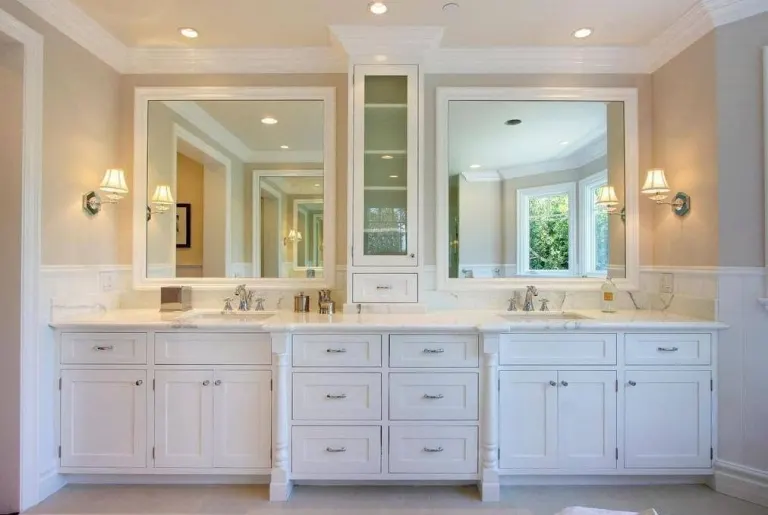
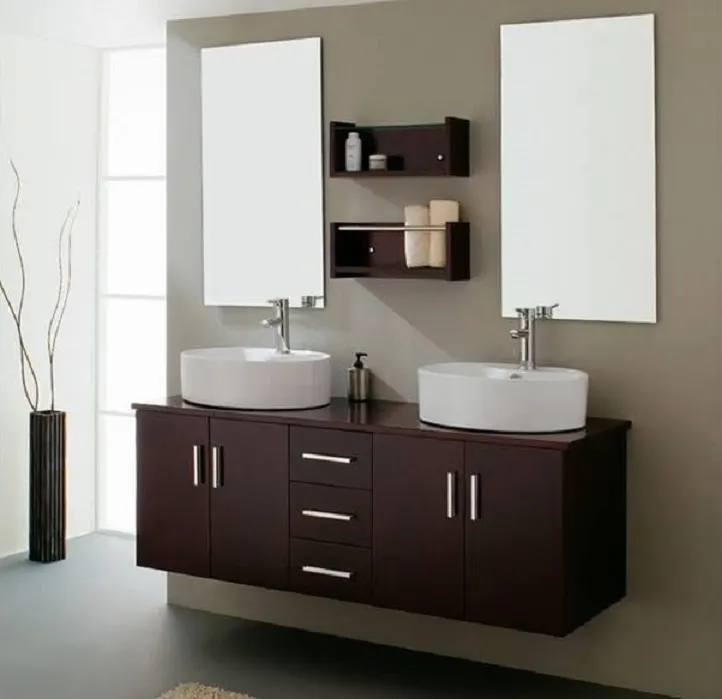
Bathroom Vanities for Resort and Coastal Hotels: Salt Air, Humidity and Material Choices
Beachfront bathrooms put joinery under constant humidity and salt-laden air. This guide explains which boards, tops, finishes and hardware suit resort and coastal hotel vanities, and what to specify before ordering.
The right resort bathroom vanity materials for a beachfront property are those that tolerate constant humidity, airborne salt and frequent cleaning: moisture-resistant cores, sealed edges, non-porous tops and corrosion-resistant hardware. A coastal hotel vanity is judged less by how it looks at handover than by how it looks after several monsoon, summer or storm seasons. This article explains the climate-specific choices that matter, wherever in the world your resort is located.
Why coastal bathrooms are harder on vanities
Inland hotel bathrooms mainly deal with water from showers and basins. On the coast, you add a second load: humid air that rarely dries out, and salt that settles on every metal surface and creeps into every unsealed edge.
Resort guests also add to the stress. Wet swimwear, sand, sunscreen and sea water are carried into the bathroom daily, and doors are often left open to balconies or terraces. The vanity becomes the first surface to take it all.
The main failure mechanisms are:
- Board swelling: moisture enters through edges, cut-outs and drilled holes, and the core expands.
- Hardware corrosion: salt deposits attack hinges, runners, screws and handles, causing stiffness, staining and eventual failure.
- Finish breakdown: surface coatings lift or blister where water gets behind them.
- Mould and odour: closed cabinet interiors with no air movement stay damp.
Choosing the cabinet carcass and board
The carcass is where most moisture damage begins, so it is the first decision to make. Standard particleboard and ordinary MDF are not suited to beachfront wet areas, even when the surface looks well finished.
Options to consider
- HPL-faced moisture-resistant board: a practical choice when the laminate fully wraps and seals the panel, and edges are properly bonded.
- Marine-grade or waterproof plywood: good dimensional stability and screw-holding, provided edges are sealed or banded.
- Moisture-resistant MDF: acceptable in less exposed bathrooms when paired with a good lacquer system and sealed edges, but it needs more care in cut-outs.
- Solid surface or PVC-based boards: worth discussing for the most exposed units, such as outdoor-adjacent or pool-side bathrooms.
Ask for the exact board type and facing in the specification rather than a general term such as waterproof. Marketing names vary between suppliers, so technical data sheets are the safer reference.
Edges, joints and cut-outs: the weak points
Most swelling starts at an exposed edge, not on the visible face. In a humid climate, every cut-out for a basin, tap or waste pipe is a potential entry point for moisture.
- Seal all cut-out edges with a suitable sealer or edge treatment before the basin and taps are installed.
- Use tight, well-bonded edge banding on visible and hidden edges alike; PUR or laser-bonded edges generally give better water resistance than basic hot-melt applications.
- Keep the base of floor-standing units off the floor with a sealed plinth or feet, so mop water does not wick upward.
- Run neutral-cure silicone or an equivalent sealant at the junctions between top, backsplash and wall.
These details cost little compared with the board itself, yet they often decide how the unit ages.
Countertop materials for beachfront humidity
A vanity top should be non-porous, easy to clean and stable in damp air. Several materials work well in coastal conditions, each with its own trade-offs.
| Top material | Coastal suitability | Points to check |
|---|---|---|
| Solid surface | Seamless, non-porous, repairable | Can scratch; thermal limits near hot tools |
| Quartz / engineered stone | Very low porosity, durable | Weight; edge and cut-out fabrication quality |
| Natural stone (marble, granite) | Attractive, but porosity varies | Sealing routine; staining and etching risk |
| HPL / laminate | Economical and practical | Edge sealing is critical; less premium feel |
If you choose natural stone for a resort look, plan a sealing and maintenance routine with the hotel engineering team. Stone with a honed finish can show water marks more readily than polished stone, so request a sample and test it with typical cosmetic and sunscreen products.
Salt air cabinet hardware: what to specify
Hardware is often the first visible casualty in a coastal property. Chrome-plated steel can show rust spots earlier than expected when salt deposits stay on the surface.
- Stainless steel hinges and runners: grade 304 is common; grade 316 offers better resistance in direct marine exposure. Ask the supplier to state the grade rather than just stainless.
- Fixings: screws, cams and wall brackets should be of the same corrosion class as the hinges, to avoid weak links.
- Handles and finger pulls: solid stainless, brass or well-coated alternatives perform better than thin plated parts; recessed finger pulls remove exposed metal altogether.
- Soft-close mechanisms: check that any damping elements are rated for humid use and can be replaced.
Finishes such as brushed or PVD-coated metal can age well, but ask for coating details and request a sample for the mock-up room.
Surface finishes that cope with humidity
Finish choice should follow exposure. A well-applied polyurethane or similar lacquer on a sealed substrate can work, but a thin or poorly cured coating will not protect an unsealed edge behind it.
- HPL and laminate fronts: reliable in wet zones and easy to wipe clean.
- Lacquered fronts: look refined, but need quality application on all faces, including backs and edges.
- Veneer and natural timber: can suit resort aesthetics, but need a durable sealing system and may move with humidity changes. Treat them as a design choice that requires protection.
- Stone-effect and wood-effect surfaces: offer the look with less moisture sensitivity.
Ventilation and design details inside the cabinet
Material choices work best alongside design decisions that let the unit dry out. Where plumbing runs inside the cabinet, trapped damp air can cause mould long before the exterior shows any sign.
- Consider open shelves or open-front designs where guests do not need concealed storage.
- Add small ventilation gaps at the back or plinth where the design allows.
- Choose wall-hung units where floor cleaning is frequent and floor moisture is a concern.
- Provide access panels for plumbing so that leaks are found and fixed early.
Climate differences across resort markets
Coastal conditions are not identical everywhere. A Mediterranean beach hotel, a Gulf resort with high humidity and heat, a tropical island property and a cooler Atlantic or Baltic seaside hotel each place different demands on joinery.
- Hot, humid tropics: prioritise moisture-proof boards, strong ventilation and mould resistance; consider on-site storage conditions before installation.
- Hot, dry coastal regions: humidity may be high indoors due to air conditioning cycles, so watch condensation and temperature swings.
- Temperate coasts: salt remains an issue for hardware, while seasonal humidity swings affect timber and veneer.
Whatever the region, the specification should name the climate, so the factory can propose suitable boards, sealing and hardware.
Plan for storage, shipping and installation
Damage can occur before the vanity ever reaches the guest. Crates left in an open, humid yard or an unventilated container can absorb moisture. Agree on packing, protection and storage conditions with your contractor, and arrange delivery to coincide with room readiness. Install units only after the bathroom is closed in and wet trades are finished.
A practical specification checklist
- Board type, facing and thickness, with a data sheet
- Edge banding method and sealing of all cut-outs
- Top material and sealing requirements
- Hinge, runner and screw grade, and finish
- Handle material and corrosion resistance
- Ventilation and plumbing access details
- Packing, storage and delivery conditions
Next step
If you are planning a resort or coastal hotel, send us your bathroom drawings, room schedule and a note on the site climate. We will review the vanity package and come back with material suggestions, a mock-up proposal and shipping options suited to your project.
Sıkça Sorulan Sorular
What is the best board for vanity cabinets in a beachfront hotel?
There is no single answer, but HPL-faced moisture-resistant board and waterproof or marine-grade plywood are common choices. What matters most is that all edges, cut-outs and drilled holes are sealed. Confirm the exact board type and facing on a data sheet rather than relying on general terms.
Is stainless steel hardware necessary for coastal hotel vanities?
For properties close to the sea, it is strongly advisable. Grade 304 stainless suits many bathrooms, while grade 316 offers better resistance in direct marine exposure. Make sure screws, brackets and handles match the hinge grade so no weak link corrodes first.
Can natural timber or veneer be used in resort bathrooms?
Yes, if it is properly sealed and the bathroom is well ventilated. Timber and veneer move with humidity, so they need a durable finish on all faces and edges. For the most exposed bathrooms, a wood-effect HPL or laminate is a lower-risk alternative.
Which vanity top material handles humidity best?
Solid surface and quartz are non-porous and stable in humid conditions. Natural stone can work but needs sealing and ongoing care. Laminate is economical when edges are sealed well. Choose according to budget, design intent and the hotel's maintenance capacity.
How can I reduce mould inside vanity cabinets?
Allow air movement through open shelves, ventilation gaps or open-front designs, and seal all joints against moisture. Provide plumbing access panels so leaks are found early. Good bathroom extraction and regular housekeeping checks also reduce damp build-up.
What should I send a factory to quote coastal vanities?
Send bathroom drawings, quantities per room type, preferred finishes and the site location with its climate. Mention the top and basin types, hardware expectations and delivery terms. This lets the factory propose suitable materials and confirm lead time and packing.
Every hotel project is different. Send us your drawings or room schedule for a tailored proposal on materials, lead time and shipping.