Louvred vs Solid Hinged Doors for Hotel Cabinets: Ventilation, Cleaning and Cost Compared
Louvred and solid hinged doors solve different problems in hotel joinery. This guide compares airflow, housekeeping effort and cost in a decision table so you can choose door by door, not by habit.
When you compare louvred vs solid cabinet doors for a hotel, the short answer is that louvred doors win where air needs to move and solid doors win where cleaning speed, sound and unit cost matter most. Neither is better everywhere. The right choice depends on what sits behind the door, the climate and how your housekeeping team works.
This article sets the two options side by side, then gives you a decision table you can adapt to your own room schedule. It is written for procurement managers, designers and fit-out contractors who need to settle door types before shop drawings are issued.
What we mean by each door type
Louvred doors
A louvred door, often called a slatted door, has horizontal or angled slats set in a frame. Slats can be fixed at a set angle or, in some designs, adjustable. The gaps between slats allow air to pass while limiting direct sight lines into the cabinet.
Solid hinged doors
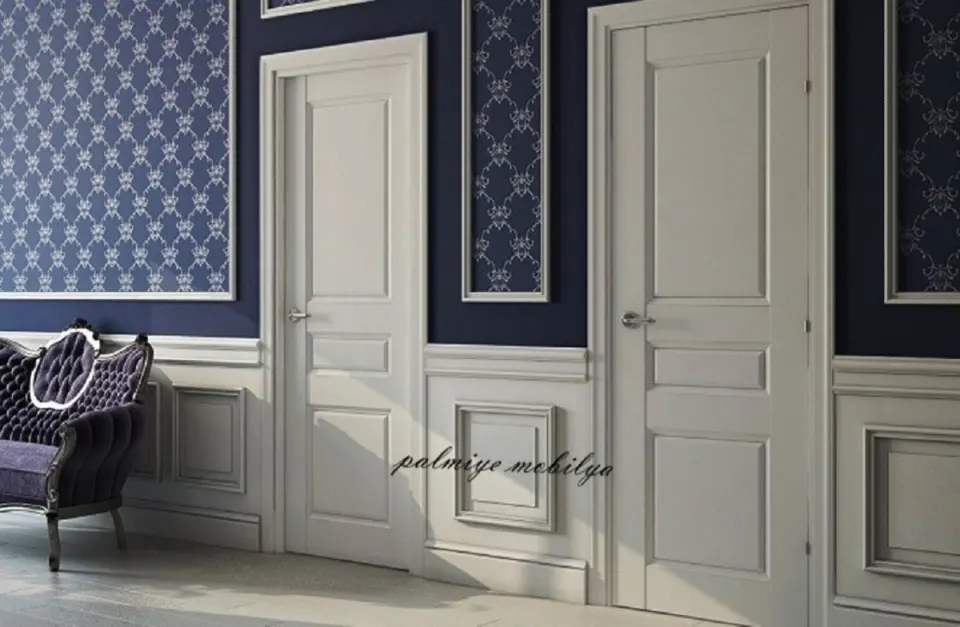
A solid hinged door is a flat or profiled panel that closes the opening completely. It may be veneered, laminated, lacquered or painted. It swings on concealed or visible hinges and seals the cabinet from the room.
Ventilation: where airflow actually matters
Airflow is the main reason to specify a slatted door cabinet. Ventilated cabinet doors reduce the build-up of stale air and moisture in enclosed storage, which is useful in several hotel situations:
- Wardrobes in humid climates: damp clothing, towels and bathrobes can leave a closed wardrobe smelling musty.
- Luggage and shoe storage: air exchange helps odours disperse.
- Concealed electronics: routers, set-top boxes and small amplifiers produce heat that needs a way out.
- Minibar and coffee units: appliances need defined clearances, and a closed door can trap heat and steam.
Solid doors do not ventilate by themselves. If a solid-fronted cabinet holds heat-producing equipment, the carcass needs separate ventilation openings, such as rear cut-outs or a recessed vent strip. That is workable, but it must be planned in the drawings rather than added on site.
It is also worth being realistic. A louvred door improves air exchange, but it does not replace room ventilation or air conditioning, and it will not fix a wet wall or a leaking pipe.
Cleaning and dust: the trade-off housekeeping feels
Slats collect dust on every upper edge, and the gaps between them are harder to wipe than a flat panel. A solid door can be cleaned in a few passes with a cloth. A louvred door takes longer, and the time adds up across hundreds of rooms and daily service cycles.
Several design choices change how much effort a louvred door needs:
- Slat profile: flatter or rounded edges are easier to wipe than deep grooved shapes.
- Slat spacing: wider gaps let a cloth or small brush reach in; very tight gaps trap dust.
- Finish: a smooth, sealed lacquer or laminate wipes clean more easily than open-grain or textured surfaces.
- Cabinet location: a wardrobe in a dusty or coastal setting will need more frequent attention than one in a sheltered interior.
Solid doors are not maintenance free either. Dark glossy fronts show fingerprints, and edges take knocks from luggage. But the cleaning routine is simpler and easier to train.
Cost: what changes the price
As a general rule, a louvred door involves more machining and more parts than a flat panel, so it often costs more per door. We do not quote fixed figures here because price depends on the project. The main drivers are:
- Number of slats per door and the machining of each slat.
- Material: solid timber, veneer, MDF or other substrates.
- Finish: multiple coats are needed on every slat face, which adds finishing time.
- Door size and whether slats are fixed or adjustable.
- Order quantity and how far the design can be standardised.
Solid doors are simpler to produce and finish, particularly in repeated sizes. That said, a heavily profiled or full-veneer solid door with book-matched grain can narrow the gap. If budget is tight, one practical approach is to use louvred doors only where ventilation has a clear purpose and solid doors elsewhere.
Other factors to weigh
- Privacy and appearance: louvres partly obscure contents but still show shapes and shadows. Solid doors hide everything, which suits cabinets that hold cleaning items or guest safes.
- Sound: well-made louvred doors are quiet, but poorly fitted slats or loose frames can rattle. Solid doors with soft-close hinges are generally the quieter choice.
- Weight and hinge load: a tall louvred door in solid timber can be heavy, so hinge type and count need checking.
- Fire requirements: check the rules of the destination country early. Material choice for slats and finishes can affect compliance, and open gaps may matter in certain locations.
- Design style: slats suit coastal, tropical and boutique concepts; solid fronts suit contemporary and minimalist rooms.
Decision table: louvred vs solid hinged doors
| Criterion | Louvred door | Solid hinged door |
|---|---|---|
| Airflow | Good natural air exchange through slat gaps | None unless vents are built into the carcass |
| Dust and cleaning effort | Higher; dust settles on slat edges | Lower; flat surface wipes quickly |
| Unit cost | Usually higher due to machining and finishing | Usually lower, especially in repeated sizes |
| Concealment | Partial; shapes visible | Full |
| Noise risk | Possible if slats or frames are loose | Low with soft-close hinges |
| Suited to heat-producing items | Yes, with correct clearances | Only with planned ventilation openings |
| Humid or tropical settings | Strong fit for wardrobes | Needs ventilation strategy |
| Housekeeping and linen stores | Fit depends on dust level | Often more practical |
Where each option usually fits
Louvred doors tend to suit
- Wardrobes and luggage alcoves in humid or warm destinations.
- TV, media and minibar units with concealed equipment.
- Design-led spaces where a slatted look is part of the concept.
Solid hinged doors tend to suit
- Back-of-house storage, linen stores and housekeeping rooms.
- Large runs of wardrobes in dry climates where airflow is not a concern.
- Projects with tight budgets or very high room counts.
A mixed approach
Many hotels combine both. A wardrobe might use solid doors on the main section and a louvred panel for the lower or upper area. This keeps cleaning manageable while still giving air a path. It should be agreed in the mock-up room, where you can judge appearance and housekeeping effort together.
How to decide for your project
- List every cabinet type in the room schedule and note what each will contain.
- Mark which ones need airflow because of heat, humidity or odour.
- Ask your operator how much daily cleaning time is realistic for each location.
- Request pricing for both door types on the same cabinet so you can compare like for like.
- Test a sample or mock-up before committing the full order.
Next step
If you are comparing door types for a new hotel or a renovation, send us your drawings or room schedule. We will review each cabinet, suggest where louvred or solid doors make sense and come back with a quotation covering materials, lead time and shipping options for your destination.
Sıkça Sorulan Sorular
Are louvred cabinet doors more expensive than solid doors?
Usually, yes. Slats need extra machining, assembly and finishing on every face, while a flat panel is simpler to make. The gap depends on slat count, material, finish and order quantity, so it is best to request quotes for both options on the same cabinet.
Do louvred doors really help with ventilation in hotel wardrobes?
They improve air exchange compared with a closed solid door, which helps with musty odours and damp items. They do not replace room air conditioning or fix moisture problems in walls, so treat them as a supporting feature rather than a complete solution.
Are slatted doors harder for housekeeping to clean?
Generally they take longer, because dust settles on slat edges and in the gaps. Rounded slat profiles, wider spacing and smooth sealed finishes make wiping easier. Solid doors are quicker to clean, which matters across large room counts.
Can I use solid doors on a cabinet that holds electronics?
Yes, but the cabinet needs planned ventilation, such as rear cut-outs or vent strips, and enough clearance around the equipment. Decide this at the drawing stage so openings are cut cleanly in the factory rather than modified on site.
Can a hotel mix louvred and solid doors in the same room?
Yes, and many projects do. Louvred doors can be used where airflow is useful, such as wardrobes or media units, while solid doors cover storage that needs full concealment or fast cleaning. A mock-up room helps confirm the balance.
Every hotel project is different. Send us your drawings or room schedule for a tailored proposal on materials, lead time and shipping.