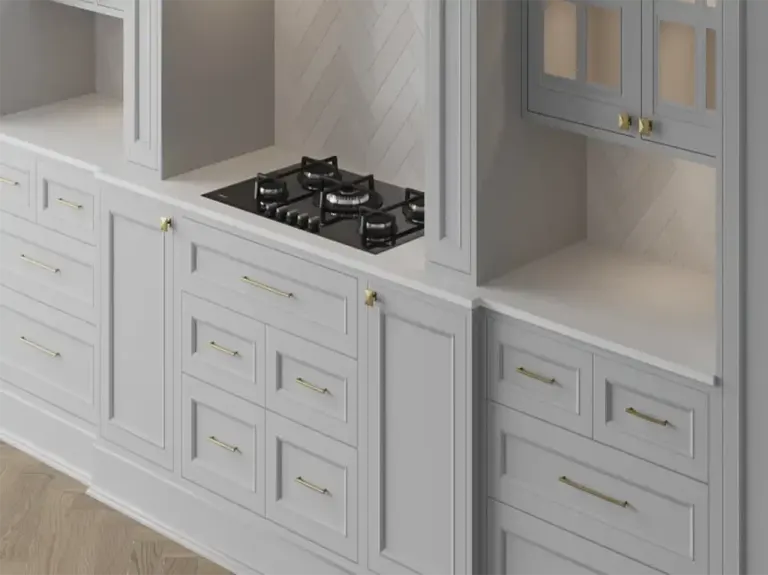
Industrial Materials Science and Surface Engineering Manual for the Production of Lacquered Kitchen Cabinets
The production of premium architectural millwork and contract hospitality casework operates under strict operational asset management metrics. In this demanding ecosystem, the production of lacquered kitchen cabinets represents far more than an aesthetic painting craft. It is a highly technical materials science discipline that integrates advanced wood composite chemistry, multi-stage subsurface calibration, computerized industrial routing, specialized automated fluid application, and resilient molecular cross-linking to survive hostile indoor environments.
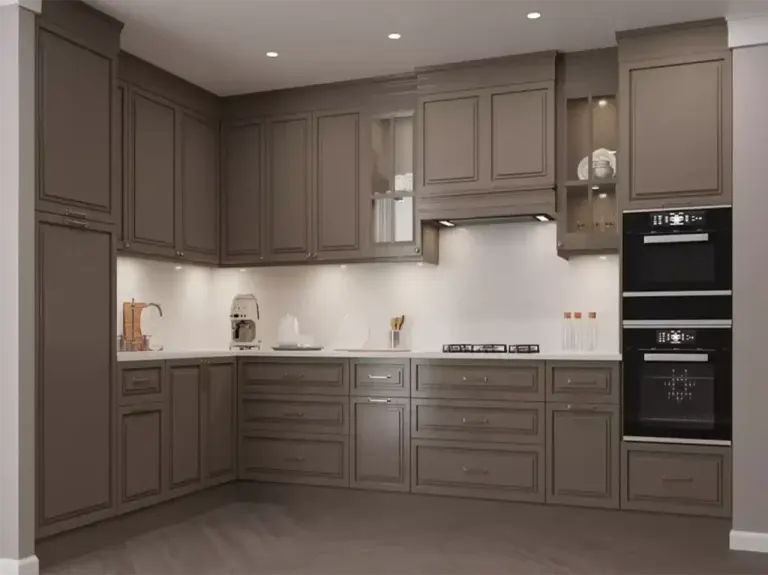
Kitchen environments host the most destructive microclimatic stress factors within any real estate asset. Continuous hot moisture vapor rising from cooktops and commercial dishwashers, localized thermal shocks, direct liquid contact from food preparation zones, and aggressive mechanical impact loading on door profiles cause substandard finishes to fail prematurely. While raw wood or basic laminate paneling can warp, separate, or crack, high-precision industrial processing provides a superior alternative. Executing flawless, commercial-grade finishes that withstand years of high-frequency usage, steam exposure, and daily sanitization requires a structured, data-driven methodology.
This comprehensive technical guide delivers an exhaustive, end-to-end analysis of the industrial production of lacquered kitchen cabinets, breaking down substrate core physics, automated sanding mechanics, polyurethane and acrylic chemical formulations, UV curing technologies, kinematic hardware integration, and international environmental compliance standards.
1. Substrate Matrix Engineering: Core Selection and Mechanical Integrity
A reliable contract framework for the production of lacquered kitchen cabinets begins with the physical and chemical integrity of the underlying core panel. Unlike veneered or laminate casework, which can mask minor substrate defects, liquid lacquer finishes amplify even microscopic surface imperfections. Therefore, selecting the correct composite core is a critical operational decision.
┌──────────────────────────────────────────────────────────────────────────────┐
│ CONTRACT LACQUER CASEGOOD SUBSTRATE LAYERS │
├───────────────────┬───────────────────────┬───────────────────┬──────────────┤
│ Substrate Type │ Core Density Baseline │ Elastic Modulus │ Surface Layer│
├───────────────────┼───────────────────────┼───────────────────┼──────────────┤
│ Premium MDF │ ≥ 760 kg/m³ │ 3,200 N/mm² │ High-Density │
│ High-Density HDF │ ≥ 860 kg/m³ │ 3,800 N/mm² │ Fine-Fiber │
│ Waterproof MR-MDF │ ≥ 780 kg/m³ │ 3,400 N/mm² │ Resin-Rich │
└───────────────────┴───────────────────────┴───────────────────┴──────────────┘
High-Density Fiberboards and Fiber Distribution Matrices
Standard residential cabinetry often relies on low-density, irregular particleboards. In contrast, the industrial production of lacquered kitchen cabinets requires premium Medium-Density Fiberboard (MDF) or High-Density Fiberboard (HDF) with a core density exceeding 760 kg/m³.
• Homogeneous Fiber Structure: High-density panels are processed using fine lignocellulosic fibers bound with synthetic resins under intense heat and pressure. This creates an isotropic material layout, meaning the panel possesses uniform physical properties in all directions.
• Edge Routing Calibration: When a multi-axis CNC machine mills complex decorative profiling, J-pull handles, or shaker bevels into a door face, a dense fiber core prevents internal pitting or fiber tear-out. This yields a crisp, sharp edge profile that can accept liquid lacquer coats evenly.
Moisture-Resistant (MR) and Hydrophobic Core Infusions
For high-risk wet environments, such as sink base cabinetry, integrated dishwasher surrounds, and refrigerator enclosures, the production of lacquered kitchen cabinets mandates MR-MDF (typically identified by a green core dye).
• Resin Matrix Modifications: These panels are manufactured using moisture-repelling melamine-urea-formaldehyde (MUF) or polymeric diphenylmethane diisocyanate (pMDI) resin binders.
• Volumetric Swelling Mitigation: When tested under EN 317 standards, premium MR-MDF exhibits a thickness swelling coefficient of less than 6% after 24-hour total water immersion, preventing subsurface expansion from cracking the delicate outer lacquer film.
Low-VOC Emission Protocols and Green Building Compliance
To preserve indoor air quality and secure valuable points in international green building metrics (such as LEED v4.1 or BREEAM), all core substrates used in the production of lacquered kitchen cabinets must meet strict clean air standards. Boards must be certified as CARB Phase 2 or EPA TSCA Title VI compliant, keeping formaldehyde emissions below 0.05 ppm. This prevents dangerous gas off-gassing into enclosed residential or commercial kitchen spaces.
2. Micro-Calibrated Subsurface Preparation: The Mechanics of Industrial Sanding
A flawless lacquer finish is achieved long before the topcoat is sprayed. In the industrial production of lacquered kitchen cabinets, automated multi-stage sanding lines are deployed to stabilize the raw core panels and eliminate microscopic surface irregularities.
[ Raw routed MDF Panel ] ──► [ Calibrated Wide-Belt Sanding (P120-P180) ] ──► [ Denibbing Orbital Brushes ]
│
[ Pneumatic Dust Extraction ] ◄── [ 3D Laser Surface Flatness Verification ] ◄─────┘
Wide-Belt Calibration Sizing
Raw MDF panels directly from the mill exhibit slight variations in thickness and can carry pressing skins rich in loose wood fibers and separating waxes. Panels pass through high-speed wide-belt sanding machines equipped with heavy, dynamically balanced steel contact rollers.
• Grit Progression Dynamics: The raw panel encounters a sequential progression of heavy-duty silicon carbide sanding belts, typically moving from P120 coarse abrasive grain to P180 finishing grits. This mechanical process cuts away the loose outer surface, achieving a flat panel thickness tolerance of less than \(\pm 0.1 \text{ mm}\).
• Friction Heat Management: Aggressive sanding builds up localized friction heat, which can soften the resin matrix within the MDF core. Advanced sanding networks feature segmented air-cushioned pad systems that continuously alter down-pressure based on real-time panel thickness inputs, avoiding edge dubbing and heat glaze marks.
Multi-Directional Denibbing and Corner Profiling
Once wide-belt calibration sizing is completed, routed details, handle grooves, and outer bevel edges pass through automated structural brush stations. These units feature multi-directional, counter-rotating orbital sanding brushes loaded with flexible P220 to P320 abrasive strips. These rotating fibers reach deep into milled profiles to clean out loose wood fibers (denibbing) without dulling the crisp, sharp edge details crucial to modern architecture.
High-Vacuum Ionized Dust Extraction
Even microscopic particles of lingering wood dust will ruin a liquid lacquer coating by creating surface pimples, craters, and adhesion bubbles. After mechanical sanding, panels pass through a high-velocity cleaning chamber. High-pressure nozzles spray ionized compressed air across the panels to neutralize static electrical fields holding dust to the board. Simultaneously, high-volume vacuum hoods pull away all suspended particulates, ensuring an entirely sterile surface enters the finishing line.
3. Industrial Surface Finishing: High-Performance Architectural Coatings
The longevity, chemical safety, and visual premium of a finished millwork layout are directly determined by the chemistry of its liquid coatings. The advanced production of lacquered kitchen cabinets uses specific polymer chains engineered to form a non-porous shield against kitchen variables.
┌──────────────────────────────────────────────────────────────────────────────┐
│ COATING RESIN CHEMICAL MATRIX SPECTRUM │
├──────────────────────────────┬──────────────────────────────┬────────────────┤
│ Finish Formulation │ Chemical/Stain Resistance │ Film Elasticity│
├──────────────────────────────┼──────────────────────────────┼────────────────┤
│ Two-Component (2K) Polyurethane│ Exceptional (EN 12720) │ Superior │
│ Water-Based UV-Cured Acrylic │ Maximum Performance │ Balanced │
│ Conversion Varnish │ High │ Medium-Low │
└──────────────────────────────┴──────────────────────────────┴────────────────┘
Two-Component (2K) Aliphatic Polyurethane Coating Systems
For high-exposure custom woodwork, vanity edges, and cabinet frames, a 2K aliphatic polyurethane coating system is the preferred industry standard in the production of lacquered kitchen cabinets.
• The Cross-Linking Mechanism: Component A (acrylic polyol resin containing pigment matrices) is thoroughly combined with Component B (an aliphatic polyisocyanate catalyst). Once applied, a chemical cross-linking reaction forms an airtight, dense molecular network.
• Vapor Barrier Protection: The cured coating forms a tough yet flexible film over the wood. It blocks liquid and steam penetration while flexing with the wood's natural seasonal movements, preventing micro-cracking, flaking, and clouding.
• UV Yellowing Defense: The inclusion of aliphatic compounds keeps the topcoat crystal clear under UV rays, stopping light finishes or white lacquers from turning yellow or orange over time.
Automated Flat-Line UV Polymeric Curing Tunnels
To optimize throughput for large-scale developments, top-tier factories handling the production of lacquered kitchen cabinets deploy automated flat-line UV finishing lines. Wooden panels move along conveyor setups where photo-reactive acrylated polymers are rolled on and cured almost instantly under high-intensity UV lamp arrays. This process produces an ultra-scratch-resistant finish with zero VOC emissions, allowing completed casework to be safely packed for shipping straight off the production line.
Water-Based Eco-Label Polyurethane Systems
As international environmental regulations tighten, the industrial production of lacquered kitchen cabinets increasingly relies on water-borne polyurethane dispersions (PUDs). These advanced systems use water as the primary carrying medium rather than organic solvents, drastically lowering volatile organic compound emissions to less than 50 grams per liter. When cross-linked with hydrophilic polyisocyanates, these water-based coatings achieve the same surface hardness, chemical resistance, and thermal stability as traditional solvent-borne finishes, matching all international EN 12720 performance rules for contact with hot oils, vinegars, and citric acids.
4. Multi-Layer Coating Architecture: Prime, Fill, and Topcoat Engineering
Achieving a high-durability finish with deep color uniformity requires a multi-layered coating layout. The production of lacquered kitchen cabinets coordinates distinct base, intermediate, and top coat layers to maximize adhesion and chemical resistance.
┌──────────────────────────────────────────────────────────────────────────────┐
│ MULTI-LAYER COATING ARCHITECTURE PROFILE │
├──────────────────────────────────────────────────────────────────────────────┤
│ 4. Clear/Matte Cross-Linked Aliphatic Topcoat (Impact Buffer Shield) │
├──────────────────────────────────────────────────────────────────────────────┤
│ 3. Pigmented Lacquer Layer (Achieves color density & deep opacity) │
├──────────────────────────────────────────────────────────────────────────────┤
│ 2. Isolator / Sanding Sealer (Locks fibers and prevents chemical migration) │
├──────────────────────────────────────────────────────────────────────────────┤
│ 1. High-Solids Polyester Primer Base (Fills pores and levels substrate) │
└──────────────────────────────────────────────────────────────────────────────┘
Layer 1: High-Solids Polyester Primer Base
The primary step following substrate calibration is applying a high-solids polyester or polyurethane primer base coat. MDF is naturally porous and will absorb liquid unevenly if unsealed. This foundational layer fills microscopic air pockets between core fibers, creating a stable, level surface. It is applied at a wet film thickness (WFT) of 120 to 140 microns, expanding into a uniform sandable base.
Layer 2: The Isolator Sealer Interlayer
Following a thorough sanding of the cured primer coat using automated P320 sanding blocks, an intermediate sealing coat is applied. This layer acts as a chemical barrier that locks down fibers and prevents moisture or organic compounds inside the MDF core from migrating upward into the final color layers, ensuring long-term color fastness.
Layer 3: Pigmented Lacquer Application
This layer delivers the target color identity requested by the design team. Sourced pigments are finely milled directly into the polyurethane binder matrix to guarantee deep opacity and high color density. Applied using high-volume, low-pressure (HVHV) automated spray arrays, it forms a smooth, uniform color layer completely free of orange peel defects, pinholes, or sagging runs.
Layer 4: Clear Protective Aliphatic Topcoat
The final layer determines the ultimate gloss level, scratch resistance, and tactile feel of the cabinet door. Depending on design guidelines, this can range from a modern 5% ultra-matte finish to a mirrored 95% high-gloss surface. This topcoat serves as a tough sacrificial shield that absorbs physical micro-impacts, resists chemical attacks from kitchen solvents, and locks out moisture vapor completely.
5. Automated Spray Logistics: Reciprocating Robots vs. Sloss-Drying Flatlines
Executing continuous, high-volume production runs with flawless consistency requires automated spray application systems. The modern production of lacquered kitchen cabinets uses advanced automation to achieve uniform film builds across thousands of complex components.
[ Clean Dust-Free Panels ] ──► [ Scanning Laser Geometry Bar ] ──► [ Multi-Axis Robotic Spray Cabin ]
│
[ Stacked Shipping Crates ] ◄── [ IR/UV Thermal Curing Zone ] ◄──────────────┘
Optical Scanning Laser Geometry Bars
Before entering the sealed spray cabin, every panel passes beneath an optical scanning laser bar. This sensor maps the exact three-dimensional outline, width profile, and location of milled handle channels in real time. The digital data is instantly fed into the processing computer, which creates custom movement paths for the spray heads to ensure edge boundaries receive the exact same coat thickness as flat panel faces.
Multi-Axis Reciprocating Robotic Spray Cabins
Inside the pressurized, clean-room spray cabins, multi-axis reciprocating arms move smoothly across the conveyor line. Equipped with advanced automated spray guns, these setups use high-efficiency atomization to break down the liquid lacquer into a ultra-fine, uniform mist.
• Over-Spray Collection Filtration: The cabins feature descending air filtration networks that pull overspray down into water-scrubber systems or disposable dry filters beneath the conveyor belt, keeping the spray zone sterile.
• Electrostatic Grounding Systems: Advanced setups ground the composite core panels electrically while giving the liquid lacquer particles a mild positive charge. This electrostatic pull draws paint droplets straight to edge margins and deep grooves, maximizing transfer efficiency and minimizing material waste.
Clean-Room Flash-Off and IR/UV Thermal Zones
Once coated, the wet panels enter a pressurized flash-off corridor where warm air carries away initial solvent vapors safely. The pieces then move through an infrared (IR) or ultraviolet (UV) thermal curing tunnel. IR lamps warm the core from the inside out to drive away remaining moisture smoothly, preventing solvent trapping bubbles. The panels then pass under high-power UV lamps, which cure the coating within seconds so components can be stacked for assembly right off the line.
6. Advanced Joinery Engineering and Kinematic Hardware Integration
The structural life of heavy-use commercial cabinetry is defined by its weak points: its joints. Production of lacquered kitchen cabinets subjected to high static stone-countertop loads and constant door-slamming dynamics requires specialized industrial joinery to prevent frame racking or mechanical failure over time.
[Mortise and Tenon Joint] [Multi-Dowel Integration]
┌───────────────┐ ┌───┐ ┌───┐
│ │ │ │ │ │
┌─────┘ ┌───────┐ └─────┐ ┌─────┴───┴───┴───┴─────┐
│ │ Tenon │ │ │ │
│ ┌─────┘ (Tongue)└─────┐ │ │ [ Fluted Dowels ] │
│ │ Mortise │ │ │ High-Density Beech │
└───┴─────(Pocket)────────┴───┘ └───────────────────────┘
High-Performance Structural Joinery Layouts
Commercial furniture must be built to handle continuous physical stress. Factories specializing in the production of lacquered kitchen cabinets construct joints using structural layouts designed to distribute stress across the timber section:
• Industrial Mortise and Tenon Joinery: This remains the structural gold standard for joining solid wood face frames and shaker-style door stiles during the production of lacquered kitchen cabinets. The tenon tongue must measure exactly two-thirds the thickness of the receiving rail, ensuring an interlocking fit that handles high lateral loads without breaking.
• Multi-Dowel Box Assembly: For carcase box assembly, automated dowel insertion lines drive fluted hardwood dowels—crafted from ultra-dense European Beech (Fagus sylvatica)—into precision-bored holes. The compressed grooves along the dowel walls allow trapped air and adhesives to vent out during pressing, creating a tight vacuum-sealed bond line.
• Reactive PUR Adhesives: Traditional water-based polyvinyl acetate (PVA) wood glues degrade and crystallize over time when exposed to the deep temperature and humidity shifts of commercial properties. The advanced industrial production of lacquered kitchen cabinets utilizes cross-linking Reactive Polyurethane (PUR) hot-melt adhesives. PUR glues cure through a chemical reaction with the wood's inner cellular moisture, creating an unbreakable polymer mesh that moves with the timber without separating.
Anti-Corrosive Metalurgic Hardware Options
The daily user experience and long-term durability of kitchen casework are directly linked to the engineering quality of its moving parts. Heavy pull-out kiler pantries, deep pot drawer glides, and wide overhead lift systems undergo thousands of mechanical cycles over their operational lifespan. In the professional production of lacquered kitchen cabinets, specifying high-end hardware options ensures smooth movement and prevents structural sagging over time.
Sink base cabinets and island modules exposed to direct moisture or grease vapor require high hardware corrosion resistance. Standard nickel-plated steel hinges degrade rapidly when exposed to dishwashing detergents, turning into rusty, stiff joints that strain the wood carcass screws. To prevent this, quality standards for the production of lacquered kitchen cabinets mandate the use of AISI 304 stainless steel or premium coated alloy hardware. This choice protects mechanical joints from rusting, ensures smooth operation, and maintains cabinet frame structural alignment for years.
7. Multi-Material Cross-Bonding: Interlocking Lacquered Components with Metals and Stone
Modern premium interior architecture frequently blends smooth lacquered surfaces with contrasting textures like brushed metals, back-painted glass, and thick natural stone countertops. The production of lacquered kitchen cabinets requires managing the distinct expansion and contraction profiles of these materials to avoid joint failures.
[ CONVENTIONAL RIGID FASTENING ] [ INDUSTRIAL SLOTTED TRACK ASSEMBLY ]
(Cracks panel under humidity) (Allows free atmospheric expansion)
┌───────────────┐ ┌───────────────┐
│ Metal Trim │ │ Metal Trim │
├───────────────┤ ├───────────────┤
│ Rigid Screw │ │ Washer Screw │
│ (No Movement) │ │ (Slides Free) │
└───────────────┘ └───────────────┘
◄─────────────►
Oval Slotted Channel
Managing Movement with Slotted Fastening
Lacquered panels expand and contract based on humidity shifts, while metal accents or perimeter trim respond strictly to temperature changes. If a brass inlay or stainless steel structural frame is rigidly anchored to a finished panel, the natural movement will eventually buckle the metal or crack the lacquered face. To eliminate this stress, all mounting channels feature oval, slotted tracks. Structural connection screws are driven directly into the center of these slots, allowing the wood composites to adjust smoothly under the metal without creating internal structural tension.
Countertop Weight Distribution
When heavy marble, quartz, or granite slabs are placed over lower cabinet boxes, the static load can cause the frame to sag over time. Internal support skeletons must feature concealed vertical posts that transfer the heavy vertical weight straight down to the floor glides. High-elasticity polyurethane spacers are placed between the stone and lacquered surfaces to absorb sudden shocks and allow both materials to adjust independently, a crucial structural consideration in the production of lacquered kitchen cabinets.
8. Sourcing Logistics, Protective Packaging, and Total Cost of Ownership
When managing a high-volume hospitality or commercial budget, savvy procurement teams look past upfront purchase costs (CAPEX) to evaluate the furniture assets' Total Cost of Ownership (TCO) over their entire useful life. Investing in high-performance production of lacquered kitchen cabinets pathways balances excellent durability with low maintenance costs.
Comprehensive Cost-Benefit Value Analysis
[ Lower Upfront Cost - Unsealed Sunta ] ─────────► [ Strategic Value - Production of Lacquered Kitchen Cabinets ]
• Operational Lifespan: 2 to 4 Years • Operational Lifespan: 15+ Years
• Absorbs moisture vapor, leading to core swelling • Cross-linked lacquers provide supreme water resistance
• Fasteners strip easily from low-density fiber beds • High-density substrates ensure excellent screw holding
• Triggers continuous replacement CAPEX cycles • Extends refurbishment timelines; preserves asset ROI
Strict Packing and Protection Protocols
To ensure casegoods arrive at the job site in pristine condition, factories involved in the production of lacquered kitchen cabinets enforce strict export packing standards:
• Perimetric Impact Edge Protectors: Dense foam corner guards shield vulnerable edge lines from mechanical hits during handling and transport.
• Airtight Moisture-Barrier Shrouds: Pieces are wrapped in thick polyethylene films to protect the wood composites from humidity shifts during transit across different climate zones.
• Heavy-Duty Wooden Crates: High-value or fragile items like glass-doored display cases are packed in reinforced wooden crates to withstand container movement.
9. Technical Maintenance Matrix for On-Site Engineering Teams
Even with high-performance industrial finishes, lacquered cabinetry requires proper care from on-site facility teams. To maximize the operational lifespan of your investment and keep your furniture performing its best, resort management teams should enforce a clear maintenance schedule:
• Microclimate Climate Control: Maintain guestroom relative humidity strictly between 35% and 55% and keep air temperatures stable (\(19^{\circ }\text{C}\) to \(24^{\circ }\text{C}\)). This controls the core's natural movement, preventing joint cracks and surface checking over time.
• Sanitation Standards: Ban the use of abrasive scrubbers or cleaning sprays that contain silicone oils or harsh ammonia. Silicone can enter micro-cracks in the finish, binding with the wood cells and making it nearly impossible to spot-refinish the furniture later on. Require staff to use mild, pH-neutral cleaners applied with damp microfiber cloths.
• Hinge and Runner Audits: Schedule an annual maintenance check for facility teams to adjust concealed hinges, verify soft-close dampening, and check runner load alignment. Catching minor shifts early keeps cabinet faces neatly aligned and prevents frames from binding.
By combining careful wood composite selection, multi-stage subsurface calibration, multi-axis CNC joinery precision, and resilient chemical finishes, the manufacturing sector for the production of lacquered kitchen cabinets delivers high-performance interior assets built to withstand the demands of global hospitality operations.